
Albanian Riviera Travel Guide: Best Beaches, Villages and Itinerary
26 October 2026 · 16 min read
The Albanian Riviera is the stretch of Ionian coastline in southern Albania running from the Llogara Pass down to Ksamil and the Greek border. For years it was one of the Mediterranean's best-kept secrets: turquoise water, white pebble beaches, olive-covered hillsides and old stone villages, with prices well below those of Italy, Croatia or the Greek islands. Today it is firmly on the radar of travellers looking for a quieter, more affordable alternative to the Amalfi Coast or Santorini, yet it still feels relaxed outside the peak weeks of summer.
This guide is written for first-time visitors. It explains where the Albanian Riviera is, when to go, how to get there from Tirana or Corfu, which beaches and villages to choose, where to stay on the Albanian Riviera for different budgets, what to eat, what a trip costs and how to travel safely and responsibly. Anything that changes often, such as ferry timetables, bus schedules and prices, is described in general terms, so always check current details before you travel.
Where is the Albanian Riviera?
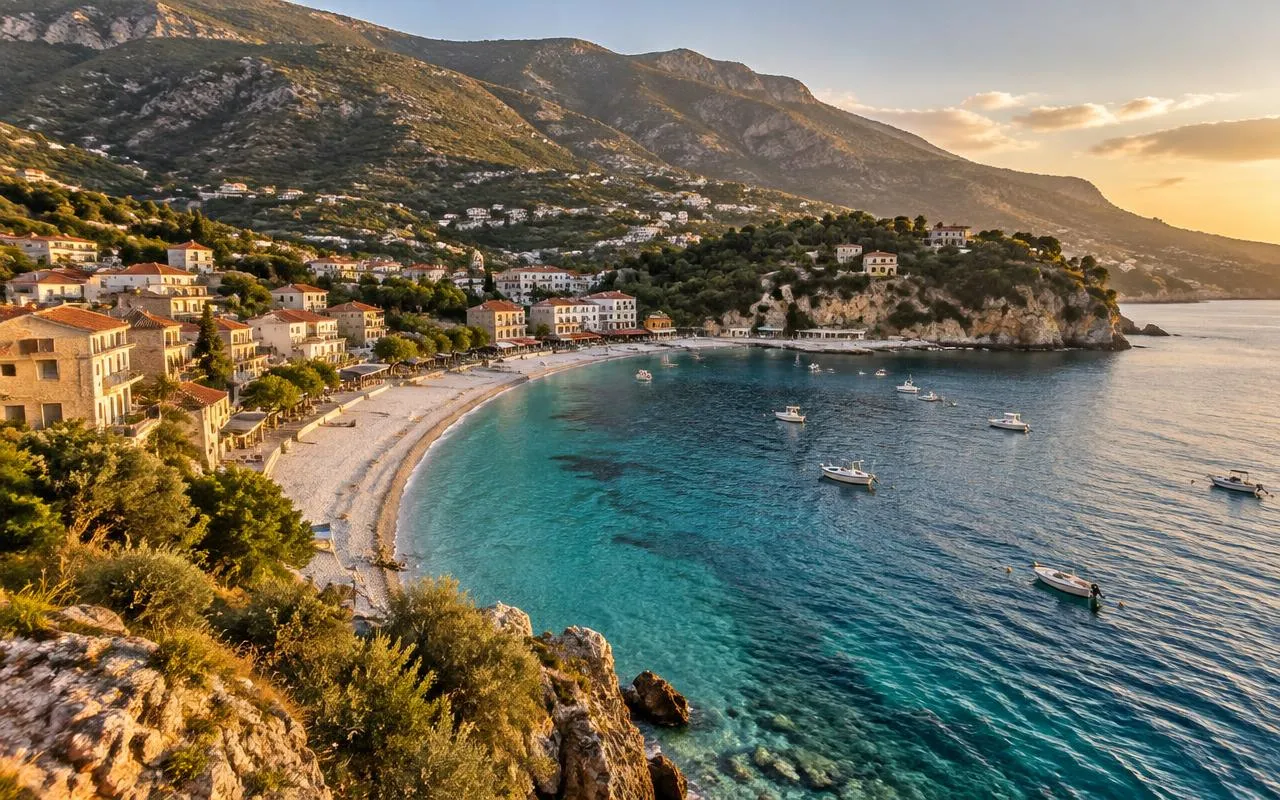
The Albanian Riviera sits on the south-western edge of Albania, facing the Ionian Sea. Most people define it as the coast between the Llogara National Park in the north and Ksamil and Butrint in the south, a distance of roughly 120 kilometres by road. To the west, across a narrow channel, lies the Greek island of Corfu, which is close enough to see on a clear day from Saranda.
The coast is dramatic. The Ceraunian Mountains drop almost straight into the sea, so the main SH8 coastal road climbs over high passes and then winds down to small bays. Villages such as Dhërmi, Himarë, Qeparo and Borsh cling to the slopes, while long beaches fill the gaps between headlands. The water is famously clear because much of the seabed is pebble and rock rather than sand.
Why visit the Albanian Riviera
Beaches with clear, turquoise water that rival the best of Greece and Croatia.
Lower costs for food, rooms and transport than most of the Mediterranean.
Real villages with stone houses, churches, castles and olive groves behind the beach strip.
Easy combinations with history, including the UNESCO-listed ancient city of Butrint and the stone town of Gjirokastër.
A warm welcome. Albanian hospitality is a source of national pride, and many visitors remember the people as much as the scenery.
The Riviera is not perfect. Construction has grown fast, some beaches are crowded with sunbed rows in July and August, and infrastructure can be patchy. Going in the shoulder season and choosing your base carefully make a big difference.
Best time to visit the Albanian Riviera
The Riviera has a classic Mediterranean climate, with hot, dry summers and mild, wetter winters. Your ideal month depends on whether you want lively beach clubs, empty coves or comfortable hiking weather.
June and September: the sweet spot
For most first-time visitors, June and September are the best months. The sea is warm enough for long swims, beach bars and boat trips are open, and accommodation is easier to find than in high summer. In September, the water is often at its warmest after the summer heat, and the light becomes softer. Prices typically sit between low-season and peak levels.
July and August: peak season
July and August bring the hottest weather and the biggest crowds, much of it from domestic tourists and the Albanian diaspora returning home. Ksamil, Saranda and Dhërmi can be very busy, traffic slows on the coastal road and the best rooms sell out early. If you travel in peak season, book ahead, start beach days early and look for quieter coves reached by boat or on foot.
May and October: shoulder season
May and early October are excellent for walking, sightseeing and road trips, with warm days and a quieter atmosphere. The sea is cooler in May but still swimmable for many people, and October can bring the occasional rainy day. Some beach bars and small hotels open late or close early, so confirm before you go.
How to get to the Albanian Riviera
There are three main ways in: via Tirana, via Corfu, or overland from Greece.
From Tirana
Tirana International Airport is the country's main airport and has connections across Europe. From Tirana, the drive south to the Riviera usually takes around four to five hours to Dhërmi via Vlorë and the Llogara Pass, and a little longer to Saranda via the inland route through Tepelenë and Gjirokastër. Driving times vary with traffic and roadworks.
Long-distance buses and minibuses (often called furgons) run from Tirana's regional bus terminals to Vlorë, Himarë and Saranda. They are cheap and fairly frequent in summer, but schedules are rarely published in one reliable place, so ask at your accommodation or at the terminal for current departures. A private transfer or rental car gives more flexibility.
This is the most common answer to the popular question of how to get from Tirana to the Albanian Riviera: fly into Tirana, then either rent a car, take a bus to Vlorë or Saranda, or book a transfer.
From Corfu
Many travellers start in Corfu, which has more international flights in summer. Ferries and fast boats cross from Corfu Town to Saranda in roughly 30 to 75 minutes, depending on the vessel. It is one of the easiest ways to reach the southern Riviera. Timetables and fares change by season, so check current sailings with the operators before you plan around them, and bring your passport for the border check.
Getting around the Riviera
Driving
Renting a car is the best way to explore the coast at your own pace, reach quieter beaches and stop at viewpoints. The main coastal road is paved and generally in reasonable condition, but it is narrow and twisting in places, and local driving can be assertive. Drive defensively, avoid driving at night where possible, watch for animals and pedestrians, and take care with parking in busy villages. If you bring a rental car from Greece, check that your insurance covers Albania.
Buses and furgons
Buses link Vlorë, Dhërmi, Himarë, Borsh and Saranda along the coast, especially in summer. They are inexpensive but can be crowded and irregular. Stand by the main road and flag a bus down if you are not near a station. Locals are usually helpful if you ask which bus goes where.
The best beaches and villages on the Albanian Riviera
The Riviera is best understood as a string of distinct places, each with a different mood. Here they are from north to south.
Llogara Pass
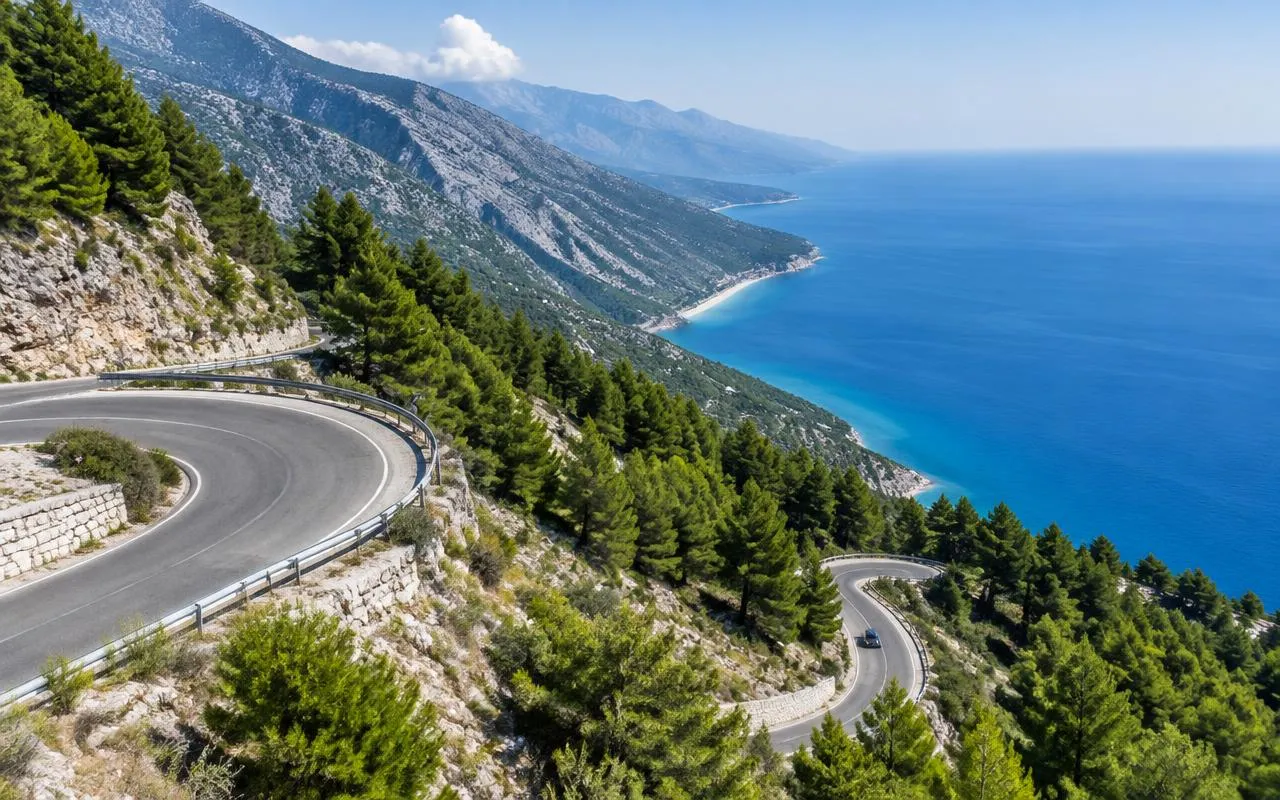
Llogara is not a beach but the gateway. The road climbs through pine forest in the Llogara National Park to a pass of roughly 1,000 metres before descending in a series of hairpin bends to the coast. The view from the top over the Ionian Sea is one of the great road-trip moments in the Balkans. Stop at a roadside restaurant for grilled lamb and mountain tea, and if you are lucky you may see paragliders launching from the slopes.
Palasë and Dhërmi
Directly below Llogara lie Palasë and Dhërmi, the most stylish part of the Riviera. Palasë has a long beach backed by newer resorts. Dhërmi combines a lively beach strip with an old stone village higher up the hill, where churches and narrow lanes look down on the sea. In summer, Dhërmi is known for its beach clubs and music, so it suits travellers who want energy. Outside July and August it is much calmer.
Gjipe Beach
Gjipe is one of the most photographed beaches in Albania, a pebbly cove at the mouth of a narrow canyon. Reaching it involves a walk down from a parking area of around 20 to 30 minutes, or a boat trip from nearby beaches. Because there is no road to the sand, it feels wilder than most. Bring water, shade and sturdy shoes, and take all rubbish away with you.
Himarë
Himarë is a working town with a harbour, a promenade, a hilltop castle and a mix of beaches within easy reach. It sits roughly in the middle of the Riviera, which makes it a practical base for exploring both north and south. Climb up to the old castle area for views, and look for smaller beaches such as Livadhi and Potami nearby. Himarë has a Greek-speaking community, which adds another layer of culture and cuisine.
Qeparo
Qeparo is split into a newer beach village and an old village perched on the hillside above. The old village, with its stone houses and quiet lanes, is one of the most atmospheric places on the coast. It suits travellers who want a slower pace, family-run guesthouses and long, quiet evenings.
Borsh
Borsh has one of the longest beaches on the Riviera, several kilometres of pebbles backed by olive groves and orange orchards, with a ruined castle in the hills. Because the beach is so long, it rarely feels crowded even in summer. It is a good choice for families and anyone who prefers space over nightlife.
Saranda
Saranda is the largest town on the southern Riviera, with a long seafront promenade, plenty of restaurants and the ferry port for Corfu. It is busy and built up, but it is convenient and lively in the evenings, and it works well as a base for day trips to Butrint, the Blue Eye spring and Gjirokastër. Climb or drive up to Lëkurësi Castle above town for sunset views.
Ksamil
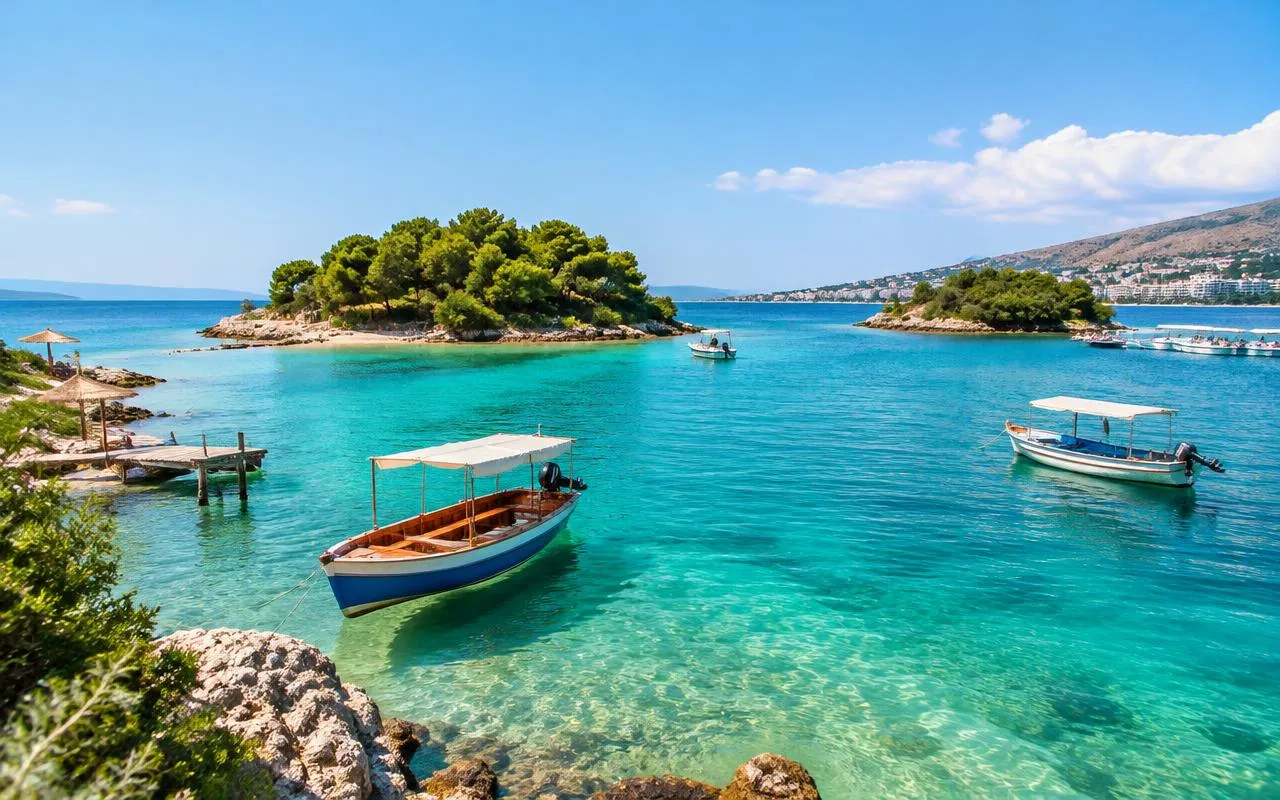
Ksamil, south of Saranda, is famous for its small offshore islands and shallow turquoise water. On a calm morning it is spectacular. In peak season, however, the beaches are packed with sunbeds that are usually rented by the day, and space on the sand is limited. Visit early in the day, consider renting a kayak or boat to reach the islands, and stay a little outside the centre for more calm.
Top things to do on the Albanian Riviera
Visit Butrint National Park
Butrint, near Ksamil, is one of the most important archaeological sites in the Balkans and is listed by UNESCO. Its ruins span many centuries, including Greek, Roman, Byzantine and Venetian periods, set among woodland and lagoon. Allow at least two to three hours, go early or late in the day in summer, and bring water and a hat.
Sample 7-day Albanian Riviera itinerary
This one-week itinerary assumes you arrive in Tirana and depart from Saranda or Corfu. Reverse it if you arrive via Corfu.
Day 1: Tirana to Dhërmi
Pick up a rental car or take a transfer south. Stop in Vlorë for lunch by the sea, then drive over the Llogara Pass in the afternoon for the view before descending to Dhërmi or Palasë.
Day 2: Dhërmi, Drymades and Gjipe
Spend the morning on the beach, then walk or take a boat to Gjipe Beach. In the evening, wander up to the old village of Dhërmi for dinner with a view.
Day 3: Himarë and Porto Palermo
Drive south to Himarë. Explore the castle area and promenade, then visit Porto Palermo for a swim near the fortress. Overnight in Himarë or Qeparo.
Day 4: Qeparo and Borsh
Walk the lanes of old Qeparo in the morning, then spend the afternoon on the long beach at Borsh. Enjoy a slow seafood dinner.
Day 5: Saranda and the Blue Eye
Continue to Saranda. Detour inland to the Blue Eye spring, then return for an evening walk on the promenade and sunset at Lëkurësi Castle.
Day 6: Gjirokastër
Take a day trip to Gjirokastër to explore the castle, the old bazaar area and a traditional tower house. Return to Saranda or Ksamil for the night.
Day 7: Butrint and Ksamil
Visit Butrint early, then spend the rest of the day swimming at Ksamil or kayaking to the islands. Depart from Saranda by ferry to Corfu or drive back north.
If you have only four or five days, focus on one area: either the northern Riviera around Dhërmi and Himarë, or the southern Riviera around Saranda, Ksamil and Butrint. If you have ten days, add more time in Qeparo or Borsh, or extend inland to Berat.
Where to stay on the Albanian Riviera
Where to stay on the Albanian Riviera is one of the most searched questions, and the answer depends on your style.
Best for first-timers: Himarë
Himarë sits in the middle of the coast, has a good choice of restaurants and rooms, and gives easy access to beaches in both directions. It is lively without being overwhelming.
Best for nightlife and style: Dhërmi
Dhërmi has the most beach clubs and boutique hotels, particularly in summer. Choose the old village for character or the beach strip for convenience.
Best for quiet and character: Qeparo
Stay in a guesthouse in old Qeparo for stone houses, sea views and peaceful nights.
Best for families: Borsh
Borsh's long beach, calm atmosphere and space make it a relaxed family base.
Best for convenience and day trips: Saranda
Saranda has the widest range of accommodation, the ferry to Corfu and easy access to Butrint, the Blue Eye and Gjirokastër.
What to eat on the Albanian Riviera
Food is a highlight. Expect fresh seafood, olive oil, vegetables, cheese and grilled meats, with strong Greek and Italian influences along the coast.
Fresh fish and seafood, often grilled simply with lemon and olive oil. Ask for the catch of the day.
Mussels, especially around Ksamil and Butrint, where they are farmed in the nearby lagoon.
Tavë kosi, a baked dish of lamb with yogurt and egg, often found inland.
Byrek, a flaky pastry filled with cheese, spinach or meat, perfect for breakfast or a beach snack.
Qifqi, rice balls with herbs and egg, a speciality of Gjirokastër.
Fërgesë, a rich dish of peppers, tomatoes and cottage cheese.
Local olives, honey, figs and seasonal fruit.
Raki, the local spirit, often offered as a gesture of hospitality.
Family-run tavernas away from the busiest beachfronts often serve the best value and the most traditional food. Portions tend to be generous.
How much does a trip to the Albanian Riviera cost?
The Riviera is generally cheaper than much of Mediterranean Europe, but prices have risen with its popularity and vary a lot by season and location. Ksamil and Dhërmi in August are far pricier than Borsh in June.
Typical costs to plan for include accommodation, car hire and fuel, meals, beach sunbed rentals, boat trips and entry fees for sites such as Butrint and Gjirokastër Castle. Sunbeds and umbrellas are often rented by the day at organised beaches, while public stretches of beach without sunbeds are free.
The local currency is the Albanian lek. Euros are widely accepted in tourist areas, but you often get a better deal paying in lek. Cards are increasingly accepted in hotels and larger restaurants, but cash is still important for small guesthouses, buses, beach bars and rural areas. ATMs are available in towns such as Vlorë, Himarë and Saranda.
Safety and practical tips
Albania is generally considered safe for travellers, and violent crime against tourists is uncommon. Normal precautions apply: watch your belongings in crowded places, use reputable accommodation and transport, and keep copies of your documents. Always check your own government's current travel advice before you go.
Road safety
The biggest risk for most visitors is the road. Drive carefully on mountain bends, avoid overtaking on blind corners, do not drink and drive, and take extra care at night. If you are not confident on winding roads, consider a transfer or buses for the Llogara section.
Sea and sun safety
The sea is usually calm in summer, but conditions can change. Swim near others, be cautious when jumping from rocks, wear water shoes on pebble beaches and watch out for sea urchins near rocks. The summer sun is strong, so use high-factor sunscreen, wear a hat and drink plenty of water.
Entry requirements
Many nationalities can visit Albania visa-free for short stays, but rules differ by passport and can change. Check the official Albanian government guidance or your nearest embassy before travel, and make sure your passport is valid for your planned dates. If you are crossing from Corfu or Greece, remember you are leaving the Schengen area, so passport checks apply.
Responsible travel on the Albanian Riviera
The Riviera's popularity has grown fast, and visitors can help keep it beautiful.
Take your rubbish home, especially from wild beaches such as Gjipe, which have no collection services.
Use refillable water bottles where safe drinking water is available, as plastic waste is a visible problem.
Stay in family-run guesthouses and eat in local tavernas so that spending reaches the community.
Respect religious sites by dressing modestly in churches and monasteries.
Avoid driving or parking on beaches and dunes.
Choose boat operators who behave responsibly around marine life and do not anchor on sensitive seabed.
Travel in the shoulder season to ease the pressure on peak months and enjoy a calmer experience.
More iDevix guides
If you are comparing warm-weather escapes for other seasons, see our guide to winter sun destinations. For more European inspiration, read our Paris travel guide and our Swiss Alps travel guide. For another coastline full of beaches, see our South Coast Sri Lanka guide.
Albanian Riviera FAQ
How many days do you need on the Albanian Riviera?
A week is ideal for seeing the main beaches and villages plus Butrint and Gjirokastër. Four or five days work if you focus on either the northern or southern section.
How do you get from Tirana to the Albanian Riviera?
Rent a car, take a bus or furgon to Vlorë, Himarë or Saranda, or book a private transfer. Driving usually takes around four to five hours depending on your destination and traffic.
Which is the best beach on the Albanian Riviera?
It depends on your style. Gjipe is the wildest, Ksamil the most famous for its turquoise water, Borsh the longest and calmest, and Dhërmi the liveliest.
Sources
Source: https://whc.unesco.org/en/list/570/
Source: https://whc.unesco.org/en/list/569/
Source: https://albania.al/