
Swiss Alps Travel Guide: Best Bases, Scenic Trains and Hikes
20 October 2026 · 15 min read
The Swiss Alps are the picture many people imagine when they think of mountains: snow-capped peaks above green meadows, wooden chalets with flower-filled balconies, turquoise lakes and red trains winding along impossible viaducts. Switzerland has made its mountains unusually easy to reach, with punctual railways, cable cars and well-marked trails that open the high country to almost everyone. This guide explains how to plan a first trip to the Swiss Alps, including when to go, where to base yourself, how to travel, what to do in summer and winter, how to manage the famously high costs, and how to stay safe in the mountains.
Why visit the Swiss Alps
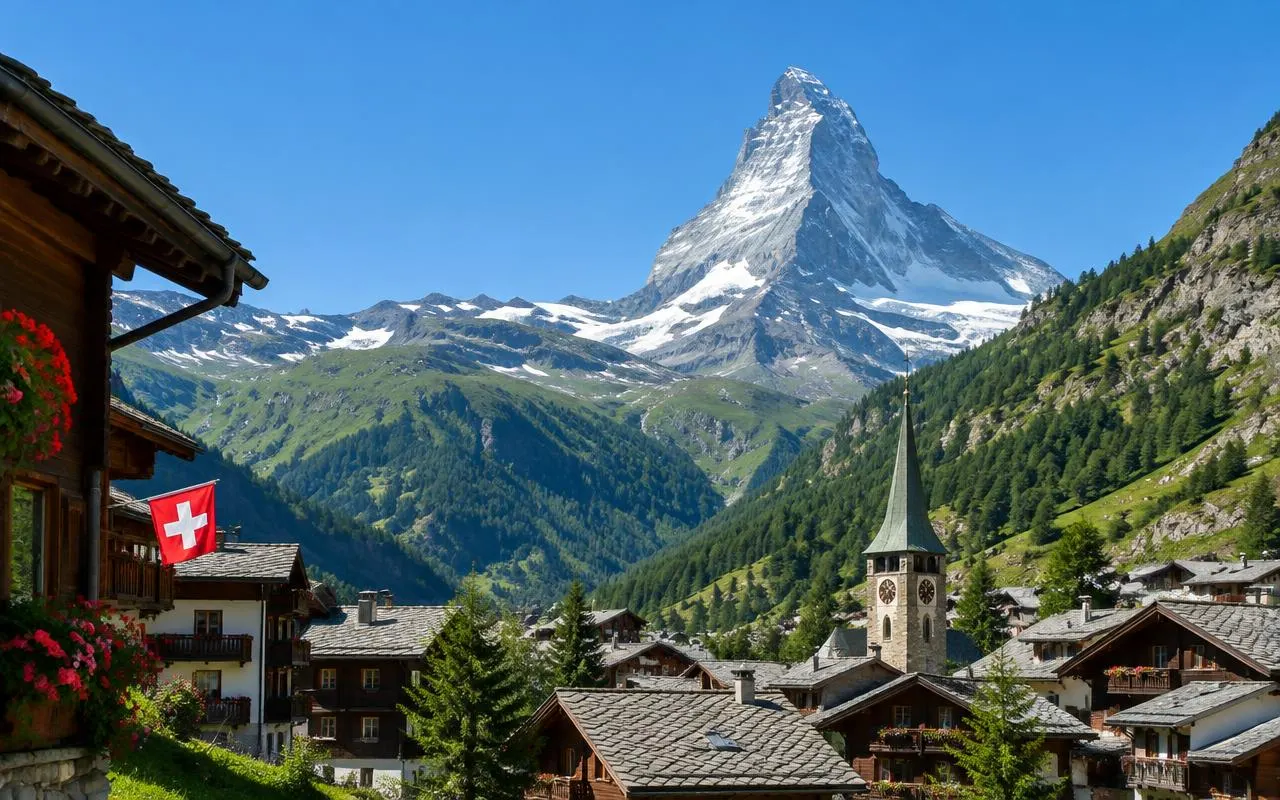
The Alps cover a large part of Switzerland, and they contain some of Europe's most celebrated scenery. The Matterhorn rises above Zermatt in a near-perfect pyramid. The Eiger, Mönch and Jungfrau tower over the Bernese Oberland. The Great Aletsch Glacier, the largest in the Alps, is the centrepiece of the Swiss Alps Jungfrau-Aletsch area, which UNESCO lists as a World Heritage Site for its outstanding glacial landscapes and their role in understanding how mountains form.
What makes Switzerland special is not only the scenery but how accessible it is. You can travel from a city centre to a high mountain viewpoint in a few hours without driving, and the network of trains, buses, boats and lifts is designed to connect smoothly. Mountain villages remain lived-in places with farming traditions, local festivals and distinct dialects and languages, since Switzerland has four national languages.
Best time to visit the Swiss Alps
The right time depends on what you want to do.
Summer, from about late June to early September, is ideal for hiking, lake swimming and scenic train journeys. Most high mountain lifts and trails are open, meadows are full of wildflowers and days are long. It is also the busiest season, so book accommodation and popular trains well ahead. Afternoon thunderstorms are common in the mountains, so start hikes early.
Autumn, from September to October, brings settled weather, golden larch trees and fewer visitors. Some lifts and mountain huts close for maintenance in late autumn, so check schedules.
Winter, from about December to March or April, is ski season. Resorts such as Zermatt, Verbier, St. Moritz, Davos and the Jungfrau region offer skiing, snowboarding, winter hiking, sledging and snowshoeing. Villages look magical under snow, and Christmas and February school holidays are peak periods.
Spring, from April to June, is a transition season. Lower valleys turn green while higher areas still hold snow, and some lifts close between the ski and summer seasons. It can be a quiet, good-value time, but high hiking trails may remain snow-covered until early summer.
Getting to the Swiss Alps
Most international travellers fly into Zurich or Geneva, with Basel another option. Both Zurich and Geneva airports have railway stations, so you can step off a plane and onto a train to the mountains. Milan in Italy is also convenient for southern areas such as Ticino and Zermatt.
Switzerland is well connected by rail with neighbouring countries, including direct trains from France, Germany, Italy and Austria.
Getting around: trains, buses and lifts
Public transport is the best way to explore the Swiss Alps. The national rail operator SBB runs a dense network of punctual trains, and regional railways, PostBus coaches, lake boats and mountain lifts connect almost every village and valley. Timetables are coordinated, and you can plan journeys using the official SBB app or website.
Travel passes can offer good value if you plan to travel a lot. The Swiss Travel Pass covers most trains, buses and boats, plus discounts on many mountain railways and cable cars, along with free entry to many museums. The Half Fare Card offers half-price tickets on most public transport for a month. Saver day passes and supersaver tickets are available when booked early. Prices and conditions change, so compare options on the official websites based on your exact route.
Driving is possible, and mountain roads are spectacular, but some villages, including Zermatt and Wengen, are car-free, and parking can be expensive. Mountain passes may close in winter. If you drive on Swiss motorways, you need a motorway vignette.
Famous scenic train journeys
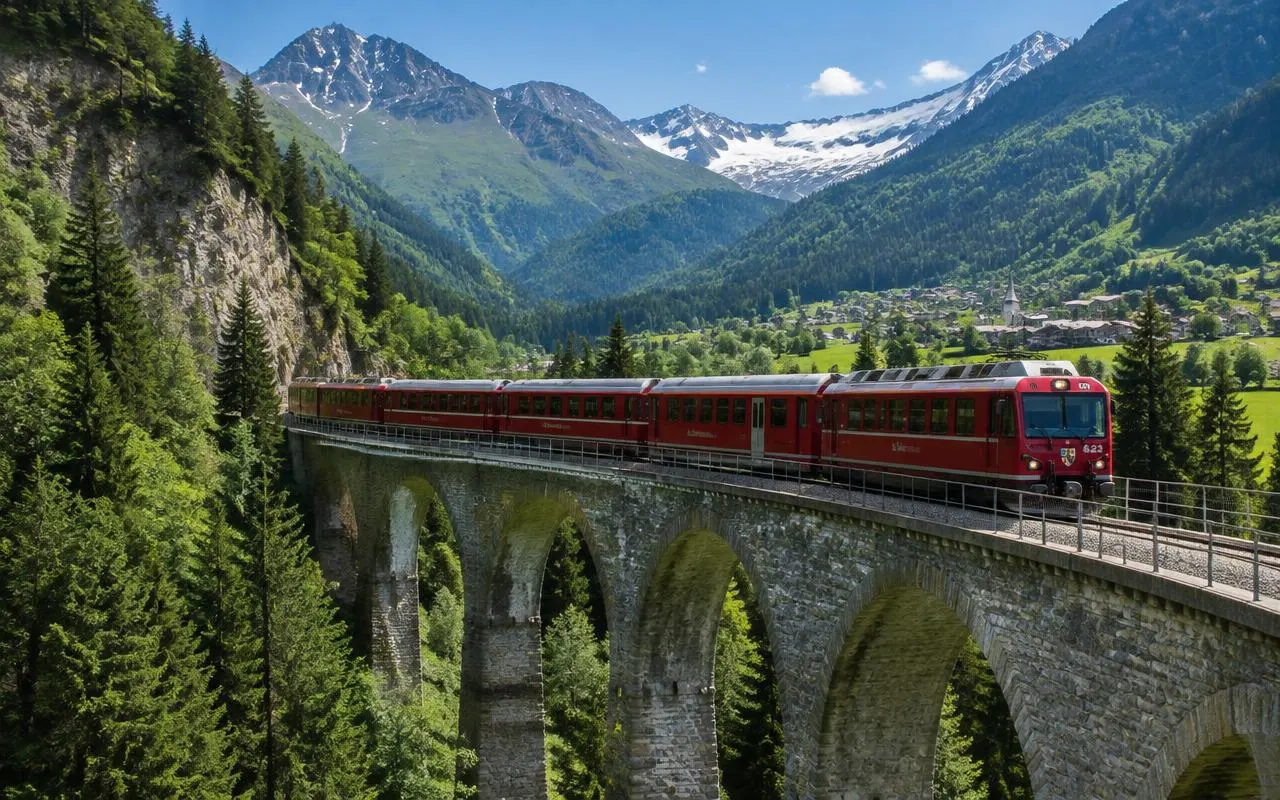
Switzerland is known for its panoramic trains. The Glacier Express runs between Zermatt and St. Moritz, crossing hundreds of bridges and passing through many tunnels on a full-day journey across the Alps. The Bernina Express travels from Chur or St. Moritz over the Bernina Pass to Tirano in Italy, and part of its route, the Rhaetian Railway in the Albula and Bernina landscapes, is a UNESCO World Heritage Site. The GoldenPass route links Montreux on Lake Geneva with Interlaken and Lucerne.
These panoramic trains require seat reservations in addition to a ticket or pass, and they sell out in peak seasons. Remember that many ordinary regional trains travel the same lines more cheaply, with windows that can sometimes open for photos.
Where to stay in the Swiss Alps
Choosing a base or two is the key to a relaxed trip, because it lets you take day trips without constantly packing and unpacking.
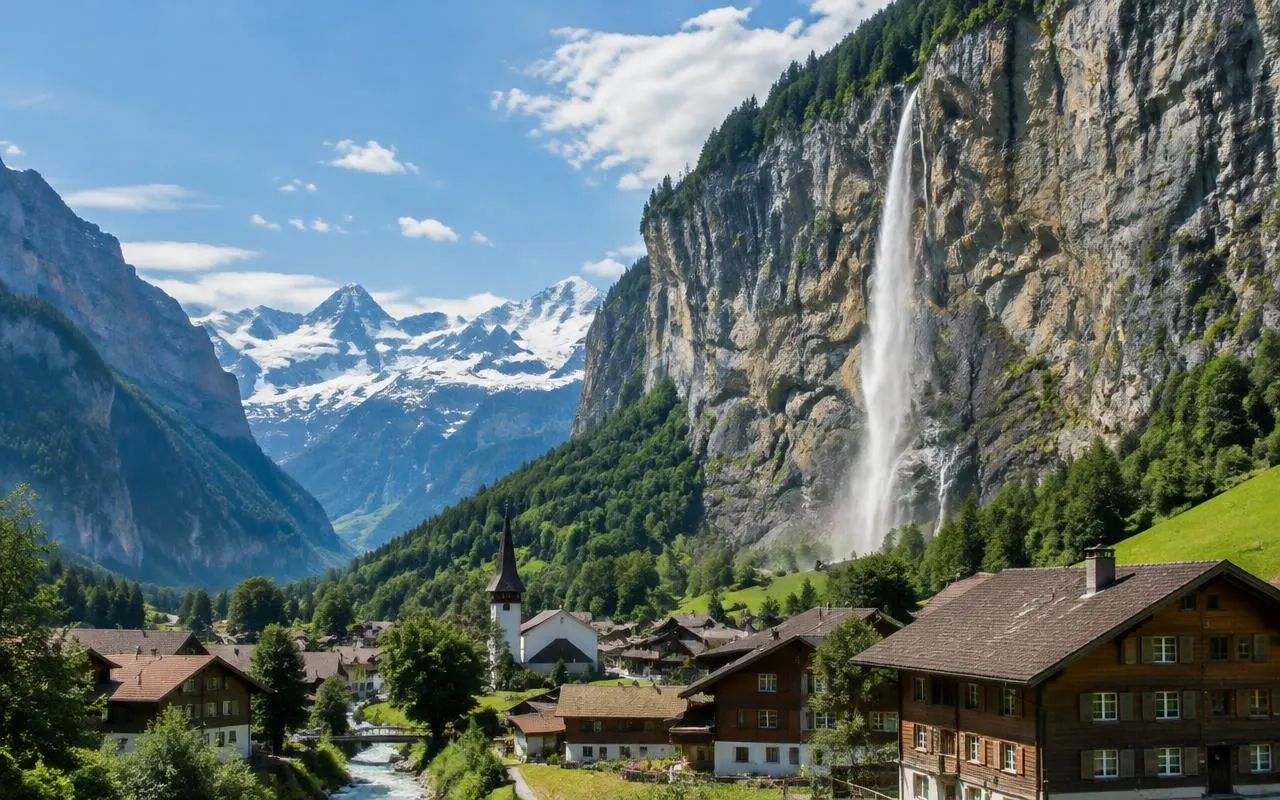
The Jungfrau region in the Bernese Oberland is the most popular choice for first-time visitors. Interlaken, between two lakes, is a convenient, well-connected town with plenty of hotels. For more mountain atmosphere, stay higher in Grindelwald, beneath the north face of the Eiger, or in the car-free villages of Wengen or Mürren. Lauterbrunnen, in a deep valley with dozens of waterfalls, is spectacular and central for exploring.
Zermatt, at the foot of the Matterhorn, is a car-free resort with excellent hiking, skiing and views. It is one of the most famous mountain villages in the world, and it can be expensive.
Lucerne is a beautiful lakeside city with access to mountains such as Rigi, Pilatus and Titlis. It suits travellers who want city comforts with easy mountain day trips.
St. Moritz and the Engadine valley in the east offer glamorous ski resorts, high lakes and a sunny climate. Nearby villages such as Pontresina are quieter.
Other excellent choices include Verbier for skiing, Saas-Fee for glaciers and a quieter car-free alternative to Zermatt, Appenzell for rolling hills and traditional culture, and the Italian-speaking Ticino region for lakes, palm trees and a Mediterranean feel.
Top things to do in summer
Hike the trails
Switzerland has a vast network of marked hiking trails, signposted with yellow markers for easy routes, white-red-white for mountain trails and white-blue-white for alpine routes. Signs show walking times rather than distances, making planning simple.
Popular walks in the Jungfrau region include the Panorama Trail from Männlichen to Kleine Scheidegg, with views of the Eiger, Mönch and Jungfrau, and the walk from Grindelwald First to Bachalpsee lake. In Zermatt, the Five Lakes Walk offers reflections of the Matterhorn on calm mornings. Near Lucerne, the trails on Rigi are gentle and well connected.
Ride to the mountaintops
Many peaks can be reached by mountain railway or cable car. Jungfraujoch, often called the Top of Europe, is the highest railway station in Europe and overlooks the Aletsch Glacier. Schilthorn above Mürren has a revolving restaurant with sweeping views. Gornergrat railway in Zermatt climbs to a viewpoint facing the Matterhorn and many glaciers. Mount Titlis has a rotating cable car and a glacier cliff walk, and Pilatus near Lucerne is reached by one of the steepest cogwheel railways in the world.
These trips can be expensive, so pick one or two that fit your interests and check webcams before you go, since clouds can hide the view entirely.
Explore lakes and valleys
Swiss lakes are as beautiful as the peaks. Lake Brienz and Lake Thun near Interlaken are famous for their turquoise colour, and boat trips are a relaxing way to see them. Lake Lucerne is surrounded by mountains, and Lake Geneva has vineyards and the medieval Chillon Castle. Many lakes have public swimming areas in summer.
Top things to do in winter
Skiing and snowboarding draw visitors from around the world. Large interconnected areas such as Zermatt, which links with Cervinia in Italy, Verbier's 4 Vallées and Davos-Klosters offer endless terrain, while smaller resorts are friendlier for families and beginners. Ski schools offer lessons for all levels.
Non-skiers have plenty to enjoy too. Marked winter hiking trails, snowshoe routes, toboggan runs, ice skating and thermal baths are widely available. Many mountain railways operate year-round, so you can still reach viewpoints in winter.
A sample seven-day itinerary
Day one: arrive in Zurich and take the train to Lucerne. Walk across the Chapel Bridge and around the old town.
Day two: take a boat on Lake Lucerne and ride up Rigi or Pilatus.
Day three: travel to the Jungfrau region via the scenic GoldenPass line, and settle in Interlaken, Grindelwald or Lauterbrunnen.
Day four: explore Lauterbrunnen valley and its waterfalls, then ride up to Mürren and the Schilthorn.
Day five: hike the Panorama Trail or visit Jungfraujoch, depending on weather and budget.
Day six: travel to Zermatt and walk through the village to admire the Matterhorn.
Day seven: take the Gornergrat railway or hike the Five Lakes Walk, then return to Zurich or Geneva for your flight, or continue on the Glacier Express.
Food and drink
Swiss mountain food is hearty and comforting. Cheese fondue, shared from a communal pot, and raclette, melted cheese scraped onto potatoes, are classic winter dishes. Rösti, crispy grated potatoes, appears on many menus, as does älplermagronen, a pasta dish with potatoes, cheese and onions, often served with apple sauce. Try air-dried meats from Graubünden, local sausages, and fresh lake fish. Swiss chocolate and pastries are, of course, excellent.
Mountain huts and restaurants along hiking trails serve simple meals with spectacular views. To save money, buy supplies at supermarkets such as Coop and Migros and enjoy a picnic. Tap water in Switzerland is clean and safe to drink, and many towns have public fountains.
Costs and money-saving tips
Switzerland is one of the most expensive countries in Europe. Accommodation, restaurant meals and mountain excursions can quickly add up. However, careful planning helps.
Stay in apartments or hotels with kitchens, and cook some meals. Buy food at supermarkets, take picnics on hikes and fill water bottles at fountains. Compare travel passes against individual tickets for your planned route. Look for regional guest cards, which many hotels provide free, offering discounted or free local transport and activities. Travel in shoulder seasons for lower prices.
The currency is the Swiss franc. Cards are accepted almost everywhere, though carrying a little cash is useful in rural areas and mountain huts.
Safety in the mountains
The Alps are beautiful but can be dangerous. Weather changes quickly, so check forecasts from MeteoSwiss before you set out, start early to avoid afternoon storms, and turn back if conditions deteriorate.
Wear sturdy shoes, carry layers, a waterproof jacket, sunscreen, sunglasses, water and snacks, and stay on marked paths. Choose routes that match your fitness and experience, and remember that altitude can make walking harder than expected.
Glaciers should only be crossed with a qualified mountain guide. In winter, stay within marked ski areas unless you have avalanche training and equipment, or are with a guide. Check avalanche bulletins from the official Swiss institute.
Make sure your travel insurance covers mountain activities, including rescue, which can be costly. The emergency number for mountain rescue is 1414 and the general European emergency number is 112.
Responsible travel
Swiss mountain environments are fragile. Stay on trails, take all litter home and respect wildlife and grazing animals. Close gates behind you, keep dogs under control, and do not pick protected plants. Using public transport is one of the most sustainable ways to explore, and it is often the easiest too. Support local farms, mountain huts and family-run hotels.
Regions of the Swiss Alps explained
It helps to understand that the Swiss Alps are not a single destination but a collection of distinct regions, each with its own landscape and culture.
The Bernese Oberland, in the canton of Bern, is the classic postcard region. It includes Interlaken, the Lauterbrunnen valley, Grindelwald, Wengen and Mürren, all clustered beneath the famous trio of the Eiger, Mönch and Jungfrau. German is spoken here, and the area is easy to reach from Bern, Zurich and Basel.
The Valais, in the south-west, is home to the highest peaks in Switzerland, including the Matterhorn and the Dufourspitze in the Monte Rosa massif. Zermatt, Saas-Fee, Verbier and Crans-Montana are all here. The Valais is also a sunny wine region, and both French and German are spoken, depending on the valley.
Graubünden, in the east, is the largest canton and one of the most varied. It contains St. Moritz, Davos, Klosters, Arosa and the Engadine valley, as well as Switzerland's only national park. It is the only canton with three official languages, German, Romansh and Italian, and Romansh place names add to its character.
Central Switzerland, around Lake Lucerne, offers accessible peaks such as Rigi, Pilatus, Stanserhorn and Titlis. It is a gentle introduction to the mountains and is particularly good for travellers with limited time.
Ticino, south of the Alps, feels almost Mediterranean, with palm-lined lakes at Lugano and Locarno, stone villages and Italian food and culture. Its valleys, such as Verzasca and Maggia, have clear green rivers and old stone bridges.
Mountain huts and alpine farm experiences
One of the most memorable ways to experience the Swiss Alps is to spend a night in a mountain hut. The Swiss Alpine Club and private owners run huts across the country, from simple refuges reached by long climbs to comfortable inns near lift stations. Most offer dormitory beds and a hearty evening meal, and the sunsets and starry skies can be extraordinary. Book ahead in summer, bring a sleeping-bag liner, and expect shared facilities.
In summer, many farmers take their cows up to high pastures, and some alpine dairies welcome visitors to watch cheese being made. Look out for farm shops selling fresh mountain cheese, butter and yoghurt along the trails. In late summer and early autumn, colourful festivals mark the return of the cattle to the valleys, with cows decorated with flowers and large bells. These celebrations are a lovely glimpse of rural tradition.
Travelling with children and less mobile travellers
The Swiss Alps are well suited to families. Many lift stations have playgrounds, themed walking trails and summer toboggan runs, and children often travel free or at reduced fares on public transport when accompanied by a parent with the appropriate family card. Short, flat walks along valley floors and lakeshores suit young children, and many restaurants offer children's menus.
For travellers with limited mobility, mountain railways and many cable cars provide step-free access to high viewpoints, and several summit stations have accessible paths and terraces. Swiss public transport generally offers good accessibility, and assistance can be booked in advance for rail travel. Check details with each operator before you go, as facilities vary between older and newer installations.
Photography tips
The Alps are a photographer's dream, but a little planning helps. Early morning usually brings the clearest skies and calmest lakes, giving mirror-like reflections. Late afternoon light warms the peaks, and sunrise on the Matterhorn, when the summit glows pink and gold, is especially famous. Check live webcams before taking an expensive lift, and carry spare batteries, since cold air drains them quickly. Always put safety first, stay behind barriers, and never step off marked paths for a better angle.
Lakeside towns and cities worth adding
Many visitors combine the mountains with a few nights in a Swiss city or lakeside town, and the contrast makes both feel more special. Bern, the capital, has a beautifully preserved medieval old town, recognised by UNESCO, with arcaded streets, fountains and a famous clock tower. Montreux, on the shore of Lake Geneva, has a mild climate, a lakeside promenade lined with flowers and easy access to Chillon Castle. Lugano, in Ticino, blends Swiss efficiency with Italian charm, and its lake is framed by steep green hills.
Zurich, the country's largest city, is a good place to begin or end a trip, with a lively old town, a lakeside promenade and excellent museums. In summer, locals swim from wooden bathing houses. Geneva, home to many international organisations, has a famous lake fountain, a historic old town and quick connections to the French Alps as well as the Swiss mountains.
What to pack
Mountain weather changes quickly, so pack layers even in summer: a breathable base layer, a warm fleece, a waterproof and windproof jacket, and comfortable hiking trousers. Good walking shoes or boots with grip are essential, along with a small daypack, a reusable water bottle, a hat, sunglasses and high-protection sunscreen, since ultraviolet light is stronger at altitude. In winter, bring thermal layers, gloves, a warm hat and boots suitable for snow and ice.
Frequently asked questions
What is the best base for a first trip to the Swiss Alps? The Jungfrau region, staying in Interlaken, Grindelwald, Lauterbrunnen or Wengen, offers the most variety and easy connections.
How many days do you need? A week lets you combine two regions, such as the Jungfrau area and Zermatt, at a comfortable pace.
Is the Swiss Travel Pass worth it? It depends on your route. It is often good value for travellers moving frequently, while the Half Fare Card may suit those staying in one area.
When is the best time to see the Matterhorn? Clear early mornings in summer and winter often give the best views, but weather can change, so stay flexible.
Can you visit the Swiss Alps without a car? Yes. Public transport reaches almost everywhere, and several famous villages are car-free.
Final thoughts
The Swiss Alps reward travellers who slow down. Rather than rushing between famous viewpoints, choose a base or two, watch the weather, and let the mountains set your pace. A quiet morning on a trail or a lakeside picnic can be as unforgettable as any summit.
Sources
Source: https://whc.unesco.org/en/list/1037/
Source: https://whc.unesco.org/en/list/1276/
Source: https://www.myswitzerland.com/en/
Source: https://www.sbb.ch/en
Source: https://www.meteoswiss.admin.ch/