
Kotor, Montenegro Travel Guide: Old Town, Bay and Day Trips
30 October 2026 · 15 min read
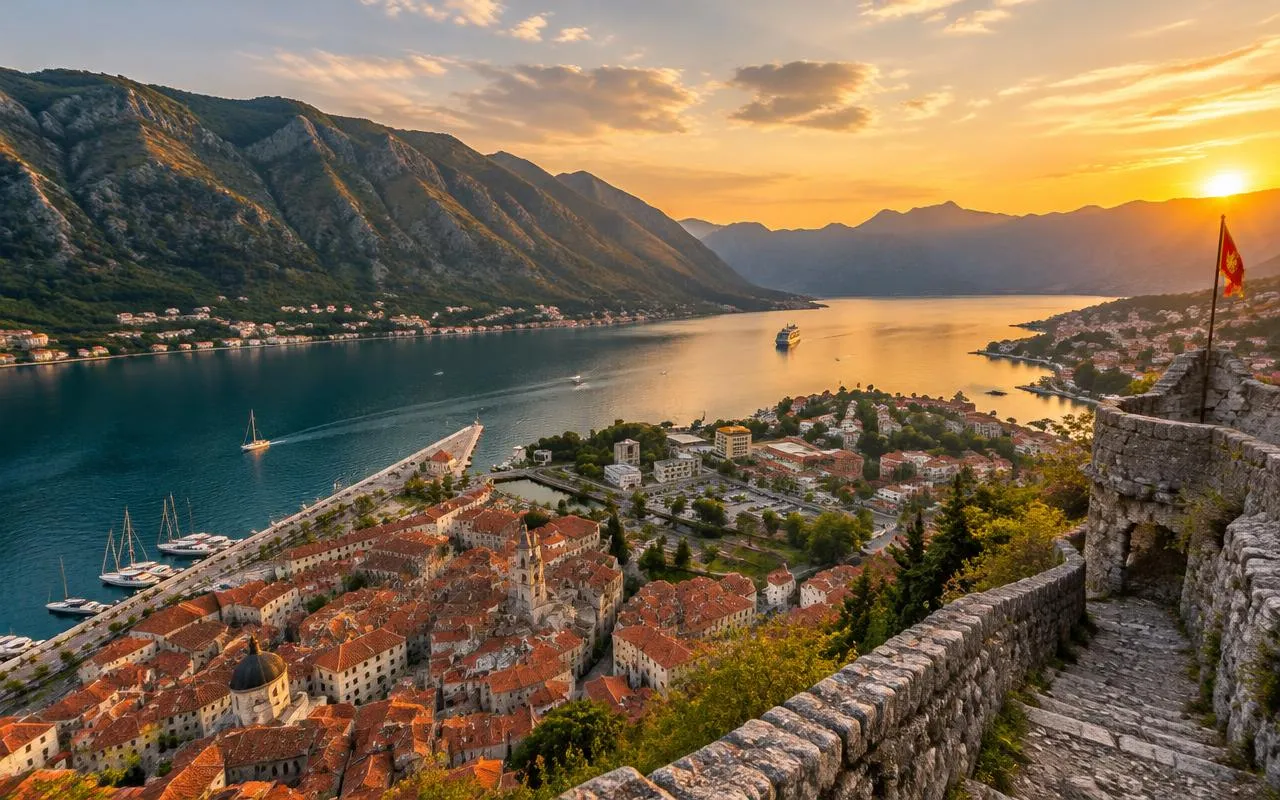
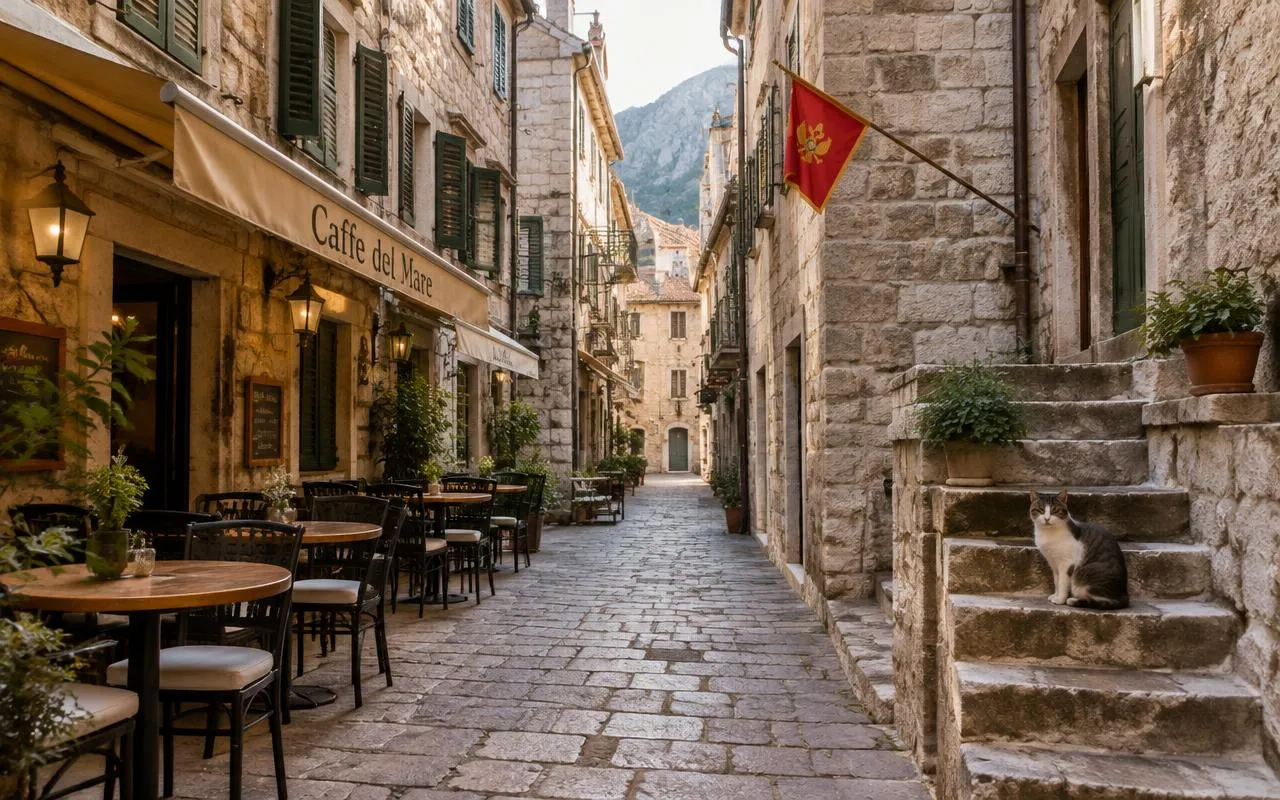
Kotor is a small walled town at the innermost tip of the Bay of Kotor in Montenegro, and it is one of the most striking places on the Adriatic coast. Grey limestone mountains rise almost straight out of the water, a zigzag of medieval walls climbs the cliff behind the rooftops, and the Old Town inside those walls is a maze of marble lanes, churches, cafes and cats. It is often compared with Dubrovnik, about two hours up the coast, but Kotor is smaller, usually cheaper and, outside the cruise-ship rush, noticeably calmer. This Kotor, Montenegro travel guide covers everything you need to plan a visit: when to go, how to get there, what to see in the Old Town, how to hike the fortress, which bay villages are worth your time, the best day trips, a three-day itinerary, where to stay, what to eat and what it all costs.
Why Visit Kotor, Montenegro
The first reason is the setting. The Bay of Kotor, known locally as Boka Kotorska, is a winding, flooded river canyon that reaches about 28 kilometres inland from the open sea. It is often described as Europe's southernmost fjord. It is not technically a fjord, but few visitors care. The water is calm and deep, the mountains are steep and green-grey, and small stone villages line the shore.
The second reason is history. Kotor's Old Town and the surrounding natural and culturo-historical region are a UNESCO World Heritage Site. The town was ruled for almost four centuries by the Republic of Venice, and the Venetian influence is everywhere: the Lion of St Mark carved over gates, palace facades with stone balconies, and the massive defensive walls that run for around 4.5 kilometres up the mountain. Earlier Byzantine, Serbian and Hungarian rulers, and later Austrian administration, all left their mark too.
The third reason is scale. You can walk across the Old Town in ten minutes, yet it takes days to see it properly. Everything is compact, walkable and close to the water, which makes Kotor an easy base for slow travel. Montenegro also uses the euro, which keeps budgeting simple for many visitors, and the country is small enough that beaches, mountains, lakes and national parks are all within a short drive.
Finally, Kotor works well as a quieter alternative to the busiest Mediterranean hotspots. If you have already seen Dubrovnik, or you want the same kind of walled-town atmosphere with fewer people and lower prices, Kotor is the obvious choice. It pairs naturally with a wider Balkan coastal trip; readers heading further south can continue to the beaches and villages covered in our Albanian Riviera travel guide, and anyone chasing warmth later in the year can compare options in our winter sun destinations guide.
Best Time to Visit Kotor
Kotor has a Mediterranean climate with hot, dry summers and mild, wet winters. The mountains wrapping around the bay trap clouds, so Kotor is noticeably rainier than many places on the coast, especially from November to February. The right time to go depends on whether you want swimming weather, hiking weather or fewer people.
Spring (April to early June)
Spring is arguably the best all-round season. Days are warm enough for walking and dining outside, the hillsides are green, and the town is lively without being overwhelmed. The sea is still cool for swimming in April and early May, but by June it becomes pleasant. Hiking up to the fortress is far more comfortable than in summer.
Summer (late June to August)
Summer brings reliable sunshine, warm water and long evenings. It also brings the biggest crowds, the highest room prices and serious heat. The fortress climb in the midday sun can be punishing, so plan any hiking for early morning or late afternoon. Book accommodation well ahead, especially for weekends in July and August.
Autumn (September and October)
September is excellent: the sea is at its warmest, the heat eases and most summer visitors have gone home. October is still mild, with a growing chance of rain later in the month. This is a lovely season for combining town sightseeing with swims and boat trips.
Winter (November to March)
Winter is quiet, cheap and atmospheric, but wet. Some restaurants, guesthouses and boat operators close or reduce hours. In return you will have the lanes nearly to yourself, and clear winter days can be stunning, with snow sometimes dusting the peaks above the bay. Kotor also has a lively winter carnival tradition around February.
Avoiding cruise-ship crowds
Kotor is a major cruise port, and on busy days several large ships can anchor or dock in front of the Old Town. When thousands of passengers arrive at once, the main squares and the lower section of the fortress walk become very crowded between roughly mid-morning and mid-afternoon. A few simple habits help:
Check the cruise schedule for your dates; the Port of Kotor publishes upcoming arrivals.
Explore the Old Town early in the morning and again in the evening, after ships have left.
Use busy middle hours for a boat trip, a swim or a visit to quieter villages.
Stay overnight rather than visiting on a day trip, so you see the town at its best.
How to Get to Kotor
Kotor is easy to reach despite its tucked-away position. Most visitors arrive by air via one of three airports, or overland from Croatia.
Tivat Airport
Tivat is the closest airport, only around 8 kilometres from Kotor. It has seasonal flights from many European cities, with the most choice in summer. Taxis and pre-booked transfers take about 15 to 20 minutes, depending on traffic. Agree the fare before you get in a taxi, or use a reputable app or pre-booked transfer.
Podgorica Airport
Podgorica, the capital, has year-round flights and is roughly 90 minutes to two hours from Kotor by road. Buses run between Podgorica and Kotor, often via Cetinje or Budva, and rental cars are available at the airport.
Dubrovnik Airport
Many travellers fly into Dubrovnik in Croatia, which has a wide flight network. The drive to Kotor is around two hours without border delays, but queues at the Croatia–Montenegro border can add significant time in summer. Buses connect Dubrovnik and Kotor several times a day in high season, and shared or private transfers are common. Combining Dubrovnik and Kotor is one of the most popular routes in the region.
Bus travel
Kotor's bus station is a short walk south of the Old Town. Regional buses link it with Budva, Herceg Novi, Tivat, Cetinje, Podgorica and destinations in neighbouring countries. Services are frequent along the coast in summer and thinner in winter. Buy tickets at the station and keep small change for the luggage fee and the station charge that some routes add.
Exploring Kotor Old Town
The Old Town is a roughly triangular grid of lanes squeezed between the bay, the Škurda river and the mountain. Three main gates lead inside, and getting gently lost is part of the pleasure. Street names are rarely used, so locals navigate by squares and churches.
The Sea Gate and the Square of Arms
Most people enter through the Sea Gate, the main entrance facing the waterfront. Inside is the Square of Arms, the largest square, with the clock tower, cafes and the old arsenal buildings. This is the busiest part of town and a good place for a first coffee and some people-watching.
Cathedral of St Tryphon
The Romanesque Cathedral of St Tryphon, consecrated in the twelfth century, is Kotor's landmark building. Its two bell towers were rebuilt after earthquakes, and inside you will find fragments of frescoes, a carved stone canopy over the altar and a small treasury. Tryphon is the town's patron saint, and the cathedral remains central to local life.
Churches, palaces and small squares
Within a few minutes' walk you can see the Church of St Luke, which for a time served both Catholic and Orthodox worshippers, and the larger Orthodox Church of St Nicholas. Look up as you wander to spot carved coats of arms on the palaces of old noble families. Small squares such as the Flour Square and the Square of St Luke are quieter places to rest.
Hiking the Kotor Fortress (St John's Fortress)
The single best experience in Kotor is the climb to the Fortress of St John, also called San Giovanni, on the mountain above the Old Town. The path follows the old defensive walls up the cliff in a series of switchbacks, with the view of the bay getting more spectacular at every turn.
The route
The main entrance is inside the Old Town, near the northern part of town. The climb involves around 1,350 steps and roughly 260 metres of elevation gain. Most reasonably fit people reach the top in 45 minutes to an hour, with stops for photographs. Halfway up is the small Church of Our Lady of Remedy, a natural resting point with a great view.
The steps are uneven, worn and slippery in places, especially when wet. Wear proper shoes with grip rather than sandals, and use the handrails where they exist. The upper sections have little shade.
Tickets and timing
An entry fee is charged at the main entrance during the main season. Opening hours vary through the year. Go at sunrise for cool air and empty paths, or late afternoon for golden light and the sunset view; just leave enough time to come down before dark, and carry a small torch in shoulder seasons.
What to bring
At least one litre of water per person, more in summer.
Sun protection: hat, sunscreen and sunglasses.
A light layer, as it can be breezy at the top.
Cash for the ticket, in case card payment is unavailable.
Some visitors use an alternative, unofficial path that starts outside the walls and joins the fortress route higher up. It is rougher and crosses private land in places, so if you use it, be respectful and careful.
Around the Bay of Kotor
The villages around the bay are the perfect complement to the Old Town. You can visit them by car, by local bus, by taxi or on a boat tour.
Perast
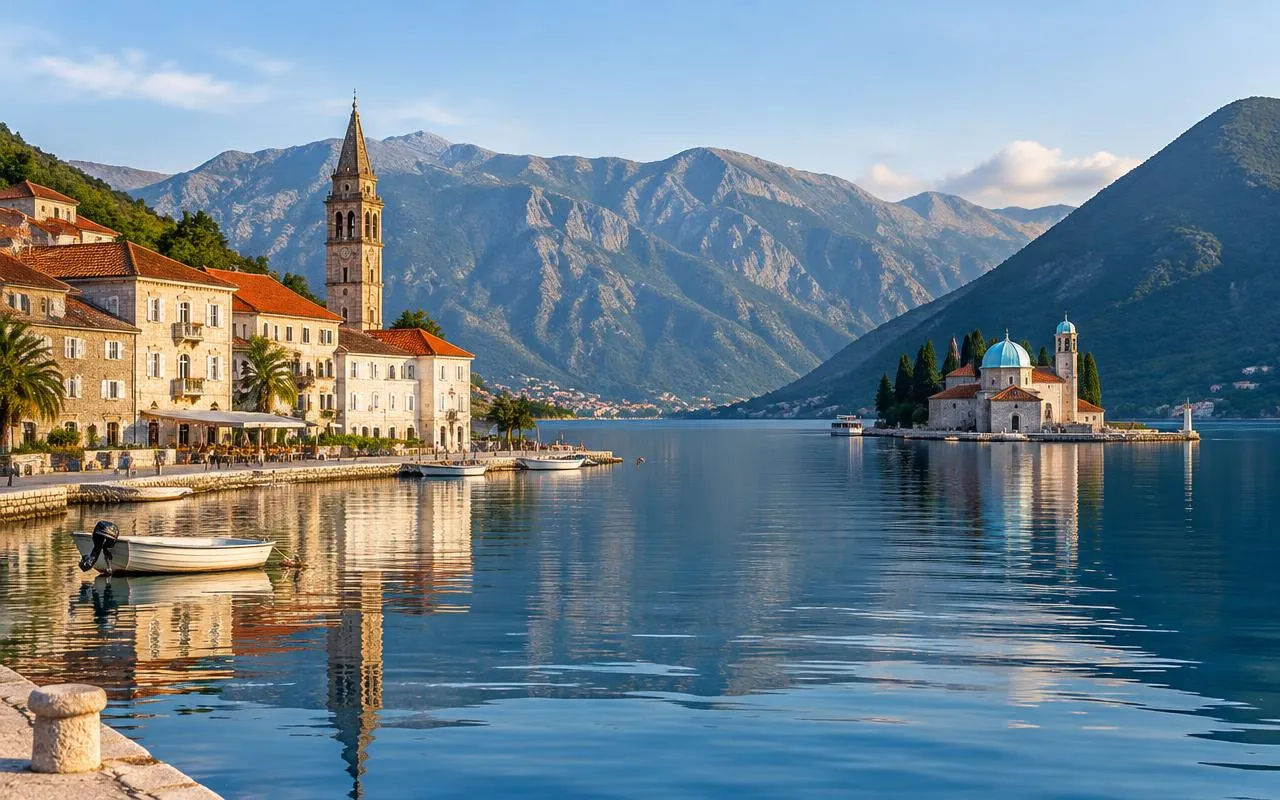
Perast is the jewel of the bay: one main waterfront street lined with baroque palaces, churches and stone piers, all facing two tiny islands. The village flourished in the seventeenth and eighteenth centuries as a centre of seafaring wealth, and its merchant families built grand homes that still survive. Climb the bell tower of the Church of St Nicholas for a view over the rooftops and islets, and visit the Perast Museum in the former Bujović Palace.
Our Lady of the Rocks
Offshore from Perast sits Our Lady of the Rocks, an artificial islet built up over centuries by local sailors sinking old ships and dropping rocks on a reef where, according to legend, an icon of the Madonna was found. The church on the island contains a collection of paintings and votive offerings left by seafarers and their families. Small boats shuttle visitors across from Perast's waterfront in a few minutes. The neighbouring island of St George, with its Benedictine monastery, is usually viewed only from the water.
Each July, locals mark the Fašinada tradition by rowing out in decorated boats to drop more stones around the island, a ritual that has continued for centuries.
Boat trips on the bay
Boat tours leave from Kotor's waterfront and from Perast. Typical options include a short trip to Our Lady of the Rocks, longer tours through the bay to the Blue Cave near the Luštica peninsula, and private speedboat charters. The Blue Cave is a sea cave where sunlight reflects through the water to create vivid blue colours, and swimming is usually possible. Compare what is included, check safety equipment and avoid overloaded boats.
Best Day Trips from Kotor
Lovćen National Park and Cetinje
The old serpentine road from Kotor to Lovćen climbs the mountain in 25 hairpin bends, with jaw-dropping views back over the bay. At the top of the park is the Njegoš Mausoleum on Jezerski vrh, dedicated to the ruler and poet Petar II Petrović-Njegoš; reaching it requires climbing several hundred steps through a tunnel. Continue to Cetinje, Montenegro's former royal capital, for museums, monasteries and old embassy buildings. Along the way, the village of Njeguši is famous for smoked ham and cheese.
Budva and Sveti Stefan
Budva, about 30 minutes from Kotor, combines a small walled old town with busy beaches and nightlife. Further south, the island village of Sveti Stefan is one of Montenegro's most photographed sights. The island itself has long been run as a luxury resort, so public access has been restricted, but the views and nearby beaches are open to all.
Lake Skadar
Lake Skadar, shared with Albania, is the largest lake in the Balkans and a national park on the Montenegrin side. It is a peaceful world of lily pads, reed beds, island monasteries and birdlife, including pelicans. Boat trips run from Virpazar, and the surrounding villages produce local wine.
A Three-Day Kotor Itinerary
Day 1: Old Town and fortress
Start early with coffee on the Square of Arms, then explore the lanes before the crowds arrive. Visit the Cathedral of St Tryphon. Have a long lunch, rest during the hottest hours, then climb to St John's Fortress in the late afternoon for sunset. Finish with dinner inside the walls.
Day 2: Perast and the bay
Travel to Perast in the morning, take a boat to Our Lady of the Rocks, and climb the bell tower. Eat seafood on the waterfront, then swim from one of the platforms. In the afternoon, either continue on a bay boat tour to the Blue Cave or return via Risan to see the Roman mosaics.
Day 3: Lovćen and Cetinje
Drive or take a tour up the Kotor serpentine to Lovćen National Park. Visit the Njegoš Mausoleum, stop in Njeguši for smoked ham, cheese and bread, then explore Cetinje. Return to Kotor for a final evening walk along the waterfront.
With more time, add Lake Skadar, Budva or Herceg Novi, or continue south along the coast into Albania.
Where to Stay in Kotor
**Inside the Old Town:** atmospheric stone guesthouses and boutique hotels steps from everything. Expect noise from cafes and bells, few lifts and no car access.
**Dobrota:** quieter seafront rooms and apartments, many with bay views and swimming platforms, within walking distance of the Old Town.
**Muo and Prčanj:** peaceful villages across the water, ideal if you have a car and want a slower stay.
**Perast:** a romantic base with excellent views; evenings are very quiet once day visitors leave.
**Tivat:** modern hotels and the marina, convenient for the airport.
Food and Drink
Montenegrin coastal food blends Mediterranean seafood with mountain staples. Try grilled fish, black risotto made with cuttlefish ink, octopus salad and mussels from the bay. From the mountains come Njeguški pršut, a smoked dry-cured ham, local cheeses, and kačamak, a hearty dish of cornmeal or potato with cheese and cream. For dessert, look for Kotor cake, an almond pastry often linked with the town. Local Vranac red wine is a good choice, and rakija, a fruit brandy, is often offered as a welcome drink.
Restaurants inside the walls can be pricier and more tourist-focused; walking a few minutes along the waterfront often gives better value.
Costs and Budget
Kotor is generally cheaper than Dubrovnik but no longer a bargain in high summer. As a rough guide, budget travellers can manage on a modest daily budget using hostels, bakeries and buses, mid-range travellers will spend more on private rooms and sit-down meals, and boutique hotels and private boat trips push costs higher. Prices rise sharply in July and August and during big events. Cards are widely accepted, but carry some cash for small cafes, boat taxis, buses and fortress tickets. A small tourist tax is usually added to accommodation bills.
Safety and Practical Tips
Kotor is generally very safe, with low levels of serious crime against tourists. Normal precautions apply: watch for pickpockets in crowds, agree taxi fares in advance and take care on slippery marble paving. Drive cautiously on narrow mountain roads, and do not attempt the fortress climb in extreme heat without water. Montenegro is not in the EU, so check roaming charges with your mobile provider. Always check current entry requirements and official travel advice before you go.
Frequently Asked Questions
How many days do you need in Kotor?
Two to three days is ideal for the Old Town, the fortress hike and Perast. Add more days for Lovćen, Lake Skadar and the coast.
Is Kotor worth visiting?
Yes. The combination of a UNESCO-listed walled town, a dramatic bay and easy day trips makes Kotor one of the highlights of the Adriatic.
Is Kotor better than Dubrovnik?
They are different. Dubrovnik is larger and grander; Kotor is smaller, often cheaper and more intimate. Many travellers visit both.
Can you swim in Kotor?
Yes, from pebble beaches and platforms around the bay, mainly from late May to early October.
Do I need a car?
Not for the Old Town. A car helps for Lovćen, Lake Skadar and remote villages, though buses and tours cover the main sights.
Sources
Source: https://whc.unesco.org/en/list/125/
Source: https://montenegro.travel/en