
Galle Dutch Fort Travel Guide: History, Things to Do and Walking Route
16 October 2026 · 15 min read
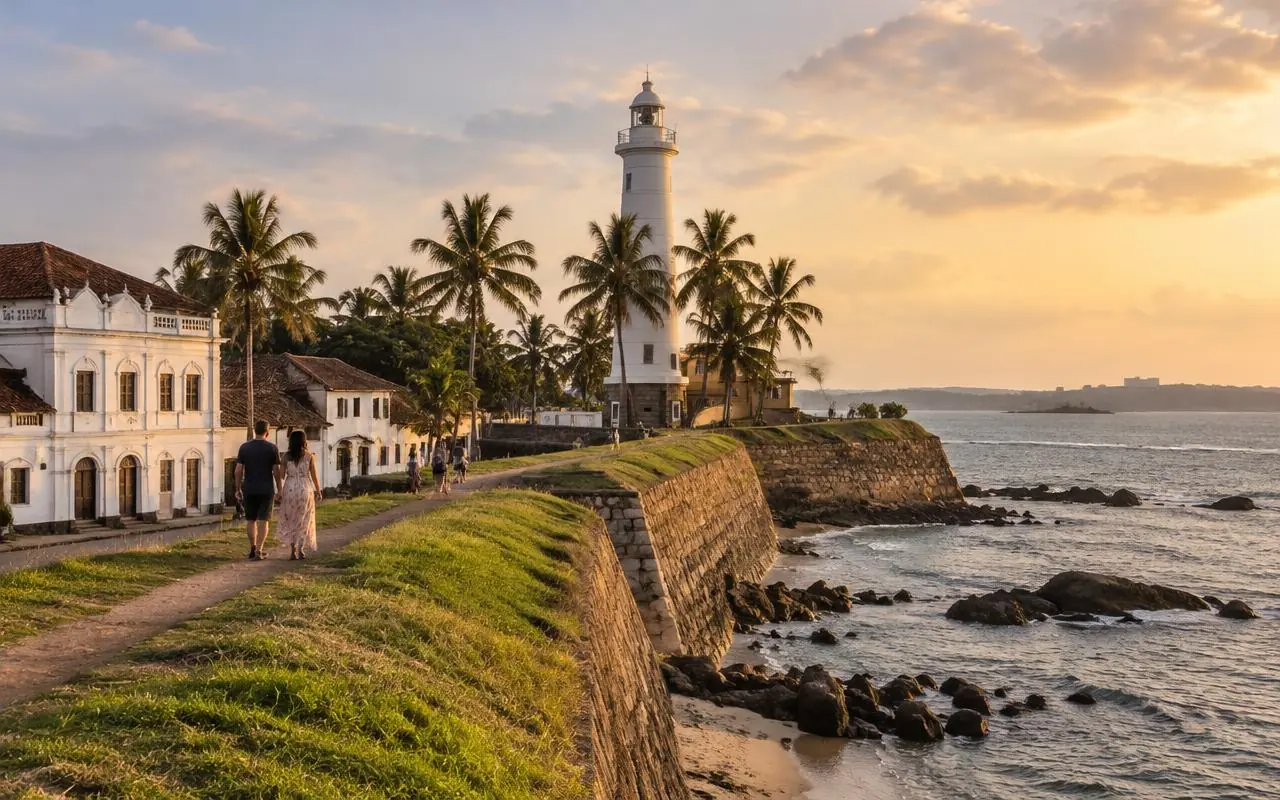
Galle Dutch Fort is one of Sri Lanka's most rewarding places to explore on foot. Ocean-facing defenses surround a compact town of tiled roofs, shaded verandas, churches, a mosque and busy everyday streets. The lighthouse provides its most familiar photograph, but the deeper appeal lies in the relationship between historic buildings and the people who continue living here.
This guide explains what to see in Galle Fort, how its history developed, and how to plan a comfortable visit. It includes transport choices, weather considerations, a practical walking route and responsible travel advice. Check current opening arrangements before traveling, because museums, religious sites and access conditions can change.
Where Is Galle Fort?
Galle Fort occupies a coastal peninsula beside the modern city of Galle in southwestern Sri Lanka. The sea borders much of the historic town, while its northern defenses face the city. Galle's railway station and main bus facilities are nearby, making the old town convenient to reach without a private vehicle.
Within the walls, a compact street grid connects major landmarks. You can combine the lighthouse, historic gateways, churches, mosque and a stretch of ramparts in an unhurried visit. Nearby coastal destinations make Galle a useful stop during a broader southern journey, although its living streets deserve more than a brief photograph break.
Who Built Galle Dutch Fort?
The answer involves several historical layers. The Portuguese established earlier European fortifications during the late sixteenth century. After capturing Galle in 1640, the Dutch East India Company rebuilt and expanded the defenses, creating much of the stone perimeter and town layout recognizable today. The British took control in 1796, retaining much of the inherited fabric while introducing later changes.
Calling it Galle Dutch Fort describes its dominant colonial layer rather than its entire story. Sri Lankan materials, labor and building traditions were essential to construction and maintenance. Generations of residents subsequently adapted homes, businesses and public spaces, making the town more than a military design imported from Europe.
A Port Before European Fortifications
Galle's maritime connections predate European rule. Traders moving through the Indian Ocean used ports along this coastline long before Portuguese defenses appeared. Goods and people traveled through commercial networks linking the island with other coastal societies, shaping a setting that was already culturally connected.
The fort represents one chapter in that longer history. Dutch trading interests influenced warehouses, administrative buildings and defenses, but they developed within an established maritime world. Museum interpretation and knowledgeable local guides can help connect the visible town with the wider story of exchange, showing why the harbor mattered beyond its present picturesque setting.
UNESCO World Heritage Significance
UNESCO inscribed the Old Town of Galle and its Fortifications on the World Heritage List in 1988. Its significance concerns the interaction between European architectural styles and South Asian traditions within a coherent fortified town. The designation recognizes an urban ensemble rather than one isolated tower or celebrated building.
That distinction changes how to explore. Street alignments, verandas, rooflines, public spaces and ordinary homes contribute alongside bastions and gateways. A residential lane can reveal as much as a famous viewpoint. Conservation must also accommodate people living here, so respecting the community is part of protecting the heritage visitors have come to enjoy.
A Living Neighborhood
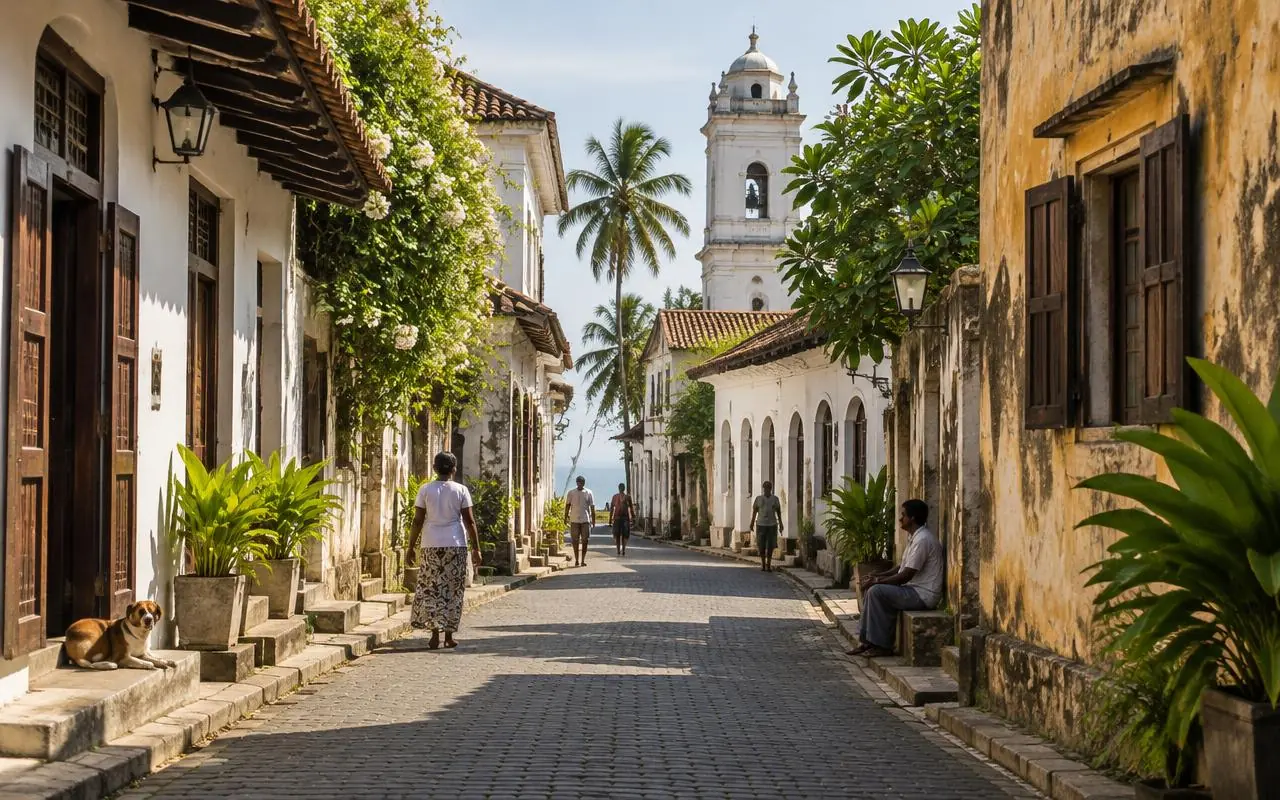
Galle Fort remains an inhabited town rather than a reconstructed museum. Families, shops, offices, guesthouses and places of worship share narrow streets. The neighborhood reflects Sri Lanka's ethnic and religious diversity, alongside the legacy of centuries of Indian Ocean exchange. Buildings continue changing function as everyday needs evolve.
Not every attractive doorway is a visitor attraction. A shaded veranda may belong to a private home, and a courtyard visible through a gate may not be open. Walking thoughtfully means noticing ordinary routines without interrupting them. Ask permission before close photographs of residents and give people room to move through their own neighborhood.
Architecture and Townscape
Architecture combines colonial and local influences. Thick masonry walls, timber doors, shuttered windows, tiled roofs and deep verandas respond to a tropical coastal environment. Courtyards and sheltered thresholds create transitions between public streets and private interiors. Restored facades sit beside buildings altered through successive administrations and later commercial development.
Walk slowly enough to compare details. Doorway proportions, roof shapes, gables and changing building heights make the streets more interesting than a quick tour suggests. A guide can distinguish documented historic features from newer additions. Independent visitors can also appreciate these layers without assuming every weathered surface belongs to the same century or historical period.
The Ramparts and Bastions
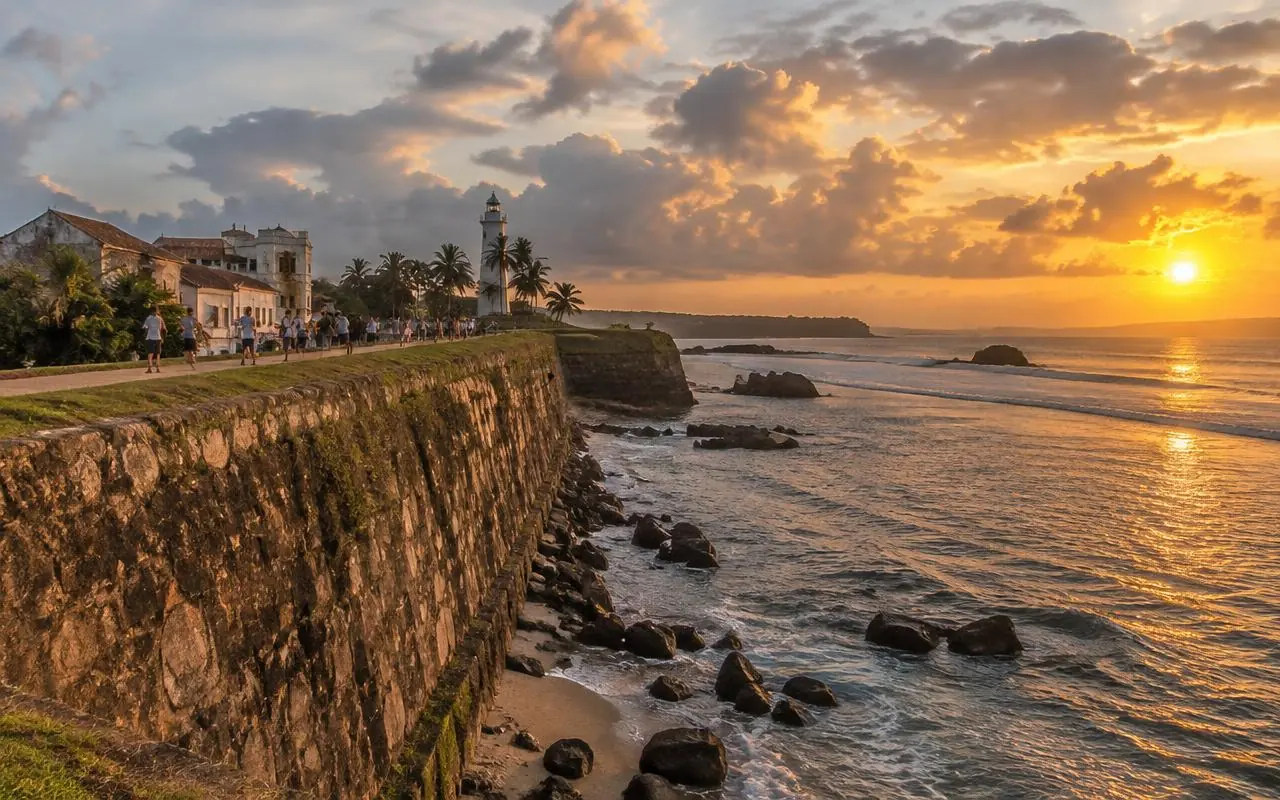
The fortifications define the peninsula and provide changing views toward the ocean, harbor, rooftops and modern Galle. Bastions project from the defenses so approaches could be covered from different angles. Sun, Moon and Star bastions are associated with the prominent northern defenses, while coastal positions reveal another relationship between walls and sea.
Choose a comfortable stretch instead of making the whole perimeter compulsory. Exposed walks become tiring under strong sunshine, and interior streets offer alternatives when you need shade. Stop to appreciate masonry, defensive shapes and coastal geography rather than treating every wall as a platform for the same lighthouse photograph.
Staying Safe on the Walls
Some rampart sections include uneven surfaces, steps or limited protection near edges. Wet stone can become slippery, while rough weather may make exposed coastal areas hazardous. Keep children close and remain behind safe boundaries. A viewpoint is not worth climbing fragile masonry or stepping toward an unprotected drop.
Do not imitate risky jumps or performances seen in travel videos. Visitors should also avoid encouraging dangerous activity for photographs or tips. During heavy rain, select indoor stops or flatter interior streets. Your route can always be shortened, and a careful visit is more rewarding than completing a circuit at unnecessary personal risk.
Galle Lighthouse
The white lighthouse near Point Utrecht Bastion is one of Galle's most recognizable landmarks. The current tower dates to 1939, replacing an earlier British lighthouse lost to fire. It retains a maritime navigation purpose, so visitors should not assume unrestricted entry or a guaranteed opportunity to climb inside.
Public coastal paths provide attractive views of the tower, palms, walls and ocean. Check local notices before approaching restricted areas, and avoid blocking walkways while arranging photographs. Different light changes the atmosphere throughout the day. The lighthouse is an excellent orientation point, but exploring surrounding streets gives a fuller understanding of the fort.
Dutch Reformed Church
The Dutch Reformed Church, also called the Groote Kerk, was completed in 1755. Its architecture and historic memorials connect the town's built environment with people who worshipped here. Where visiting is permitted, take time to notice interior details quietly, without disrupting services or treating religious objects as photographic props.
Other churches add further layers to Galle's religious landscape. Exterior visits can be worthwhile when a service is underway or entry is restricted. Modest clothing and attendants' guidance should shape your behavior. Do not assume every religious building follows identical visitor rules simply because several stand within a short walking distance.
Meeran Jumma Mosque
Meeran Jumma Mosque stands close to the lighthouse area and reflects Galle's longstanding Muslim community. Its distinctive architecture contributes to a streetscape shaped by maritime trade and cultural exchange. The present building belongs to a later historical layer than the principal Dutch defenses, demonstrating that the town continued developing after fortification.
This remains an active place of worship. Ask whether visitors may enter, avoid interrupting prayer, and follow instructions concerning clothing and footwear. Never photograph worshippers without consent. Respectful exterior viewing is a good alternative when an interior visit would be inappropriate, and nearby streets allow your walk to continue naturally.
Museums and Maritime History
The Maritime Archaeology Museum, managed by Sri Lanka's Central Cultural Fund, occupies a historic Dutch warehouse associated with the Old Gate. Its interpretation provides context for maritime trade and underwater archaeology. A museum stop can turn an attractive coastal walk into a better understanding of why Galle's harbor mattered.
Choose according to your interests and allow time to read displays rather than racing through multiple collections. Confirm current opening arrangements, ticket categories and temporary closures with the responsible institution. Do not rely on an old admission price copied between travel websites. Museums also offer a useful change of pace when outdoor conditions become uncomfortable.
Historic Gateways
The Main Gate and Old Gate are distinct landmarks, so clarify which entrance your driver or guide means when arranging a meeting. The northern approach helps orient visitors between the historic defenses and modern Galle. The Old Gate and warehouse area illustrate the relationship between fortified town and maritime commerce.
Look for historical details without assuming every alteration belongs to one period. Successive administrations changed buildings, and later conservation introduced further interventions. Official interpretation or a careful guide can separate documented history from appealing anecdotes. Understanding those layers is more useful than collecting exact dates from uncertain stories repeated without a reliable source.
Streets Worth Exploring
Church Street, Pedlar Street, Lighthouse Street and Leyn Baan Street provide useful starting points. Their shops, houses and shaded thresholds reward wandering between major landmarks. You do not need to follow every lane to appreciate the town: choose a few streets and notice how everyday activity shares space with visitor businesses.
Give yourself permission to pause. A roofline seen from another angle, a restored timber door or a glimpse of planting behind a wall can reveal details missed during a hurried checklist visit. Avoid entering private courtyards simply because an open gate looks inviting. Respectful curiosity creates a richer experience than constant movement between famous spots.
Shops, Craftwork and Food
Small shops, galleries and cafés occupy restored buildings throughout the interior. When considering textiles, craftwork or art, ask about materials and makers. Clear information is more useful than vague claims of authenticity. Compare options politely, and request permission before photographing interiors, products or people working inside shops.
Food offers another connection with the southern coast. Rice and curry, coconut-based dishes, seafood and tropical fruit are worth exploring where available. Ask about ingredients, dietary requirements and spice levels before ordering. Check menus directly rather than relying on outdated prices. A shaded meal also provides a sensible break between exposed rampart walks.
Best Time of Year
The southern coast generally experiences more favorable outdoor weather from roughly December through April. Rain is more likely during the southwest monsoon season, although showers can occur at other times and sunshine is never guaranteed. Galle can be visited throughout the year when plans remain flexible and local weather advice is respected.
Do not equate a wet-season forecast with an entirely wasted visit. Shorter outdoor walks, museum stops and sheltered meals can still create an enjoyable day. Conversely, bright weather requires attention to heat and dehydration. Choose your schedule according to actual conditions rather than assuming one season makes every walking route comfortable or safe.
Morning or Sunset?
Early morning and late afternoon usually offer more comfortable walking than midday. Morning suits architectural details and quieter streets, while late afternoon brings softer light and a chance to finish beside the sea. Popular sunset viewpoints attract more people, so keep paths clear and avoid crowding exposed edges.
Clouds may obscure the sun, but the changing sky and ocean can still make the walls rewarding. Build flexibility into the plan rather than judging the visit by a single photograph. Travelers particularly interested in photography may prefer an overnight stay, allowing different light without rushing between sightseeing and a fixed return transfer.
Getting There from Colombo
The coastal railway connects Colombo with Galle and onward southern destinations. Ocean views are part of the appeal, while the station's proximity to the fort makes rail convenient without a car. Check Sri Lanka Railways information for your date, including actual services, reservation arrangements and available seating options.
Buses also connect Colombo and Galle. Distinguish expressway journeys from coastal-road services because stops and travel patterns differ. Confirm departure and arrival points before boarding. Private drivers provide flexibility, with the Southern Expressway useful for longer transfers. Agree on full costs, waiting arrangements and a clear pickup location before setting out.
Arriving from Nearby Beach Towns
Visitors staying around Unawatuna, Hikkaduwa, Weligama or Mirissa can incorporate Galle into a broader southern journey. Local buses, taxis or tuk-tuks may suit transfers depending on the starting point. Check the return arrangement instead of assuming an identical service will remain available after your sunset walk or evening meal.
Walking is usually simplest inside the fort. Narrow lanes still accommodate traffic and daily neighborhood activity, so stay alert rather than assuming pedestrian-only streets. Ask for a convenient drop-off point without unnecessary residential driving. If staying inside the walls, confirm luggage access and arrival arrangements with your accommodation before traveling.
Accessibility and Comfortable Walking
Compact does not mean universally accessible. Interior streets are generally easier than exposed ramparts, but uneven paving, steps, traffic and narrow passages can create difficulties. Travelers using wheelchairs or walking aids should confirm specific routes and entrances with accommodation staff or a guide instead of relying on a blanket accessibility claim.
Wear footwear with good grip, carry water and use sun protection. Plan shade breaks and check toilet access rather than assuming every landmark provides facilities. Families should keep children away from unprotected wall edges. Flexible pacing, shorter routes and indoor alternatives make the experience more comfortable for visitors with different needs.
Responsible Visiting
Respect private homes, keep noise considerate and ask before close photographs of residents. Do not obstruct doorways, working businesses or narrow streets while arranging a shot. Supporting businesses that explain their products and choosing knowledgeable local guides can help connect visitor spending with the community rather than only with picturesque scenery.
Leave historic masonry untouched and dispose of litter appropriately. Religious visits require particular care with dress, footwear and photography. Avoid encouraging dangerous performances from the walls. The most memorable visit leaves people, buildings and public spaces no worse for your presence, allowing residents to continue enjoying the town visitors admire.
Nearby Places to Combine with Galle
Unawatuna offers a natural nearby option for combining cultural sightseeing with coastal time. Rumassala and surrounding beach areas provide a different landscape from the walled town. Farther along the coast, Hikkaduwa, Weligama and Mirissa can fit a broader itinerary, but adding several destinations to one day quickly reduces time for Galle.
Choose one realistic extension rather than a long checklist. Weather, swimming conditions and transfers matter more than distance alone. Never assume a beach is safe because others are in the water. If history is your priority, staying longer in Galle may be more rewarding than immediately rushing toward another attraction.
A Practical Half-Day Walking Route
Start near the Main Gate and northern defenses to orient yourself between historic town and modern city. Look toward the clock tower and northern bastions before entering the streets. Continue toward Church Street and the Dutch Reformed Church, allowing time for a respectful visit if access is available and appropriate.
Next, head toward the Old Gate and warehouse area. A maritime museum visit fits naturally here if current opening arrangements suit your schedule. Continue through the streets toward the lighthouse and Meeran Jumma Mosque, appreciating exterior architecture without making entry essential to the route. Take a shaded break before returning to exposed coastal paths.
Finishing the Route
Follow a comfortable stretch of seaward defenses toward Flag Rock, keeping clear of unsafe edges. Return through Pedlar Street or Lighthouse Street, allowing time for shops or a meal. For a late afternoon visit, finish near an appropriate sunset viewpoint rather than crossing the town repeatedly to chase the light.
Reverse or shorten the route when weather, crowds or mobility needs suggest a better option. The itinerary is a framework, not a mandatory sequence. Spending longer in one rewarding street or museum is often preferable to completing every landmark without attention. Leave enough time for your onward journey, especially when relying on public transport.
Frequently Asked Questions
What Is Galle Dutch Fort Famous For?
It is known for coastal defenses, a lighthouse, historic streets and layered architecture. UNESCO recognition concerns the interaction of European styles and South Asian traditions. The living community is equally important, making Galle more than a collection of monuments or a setting for one photograph.
How Long Should I Spend Here?
Allow roughly half a day for a relaxed first visit, adding time for museums, food and photography. A full day or overnight stay lets you experience morning and evening without rushing through the hottest hours. Your interests and walking comfort matter more than completing every stop.
Can I Visit from Colombo in One Day?
Yes, but plan around actual transport services and leave generous time for the return. Trains, buses and private transfers have different departure points and timing. An overnight stay can be more relaxed if you want sunset, museum visits and a meal without constantly watching the clock.
Do I Need a Guide?
Independent walking is practical, while a knowledgeable local guide adds historical context and identifies easily missed details. Choose someone respectful of residents and religious sites. Agree on duration, price and meeting point beforehand, clarifying whether tickets or other expenses are included.
What Should I Check Before Visiting?
Confirm weather, transport, museum opening arrangements and temporary access restrictions. Carry water, suitable footwear and modest clothing for religious sites. Keep the day flexible enough to pause or change direction. Considerate curiosity usually produces a better experience than trying to recreate someone else's entire itinerary.
A Final Planning Note
Before leaving, review your onward journey and give yourself room for delays. Keep museum visits optional when opening arrangements are uncertain, and prioritize a few places that genuinely interest you. The best Galle Fort visit balances history, coastal scenery and everyday neighborhood life. A slower pace helps reveal architectural details, makes heat easier to manage, and gives residents space to carry on their routines. Whether you arrive by train, bus or car, thoughtful preparation allows the town to remain the focus rather than a rushed and unnecessarily stressful onward transport schedule.
Source: https://whc.unesco.org/en/list/451/