
Bali Travel Guide: Best Areas, Things to Do and Tips for First-Timers
20 October 2026 · 15 min read
Bali is one of those rare places that manages to be several destinations at once. In a single week you can watch dawn break over emerald rice terraces, sit quietly in a temple courtyard while incense drifts past carved stone, swim in clear water beneath limestone cliffs, and end the day with grilled fish on the sand as the sky turns orange. This guide is written for first-time visitors who want to understand the island before they arrive: where to base yourself, when to go, how to get around, what to see, how much to budget, and how to travel in a way that respects the people who call Bali home.
Why Bali deserves a place on your list
Bali is a province of Indonesia, sitting between Java to the west and Lombok to the east. Most of Indonesia is predominantly Muslim, but Bali is overwhelmingly Hindu, and that difference shapes almost everything a visitor notices. Every family compound has its own shrine, small woven offerings called canang sari appear on doorsteps and dashboards each morning, and the calendar is full of ceremonies that can bring whole villages onto the streets in white and gold. Faith here is not something kept behind museum glass; it is part of daily life, and travellers who slow down are often invited to see it up close.
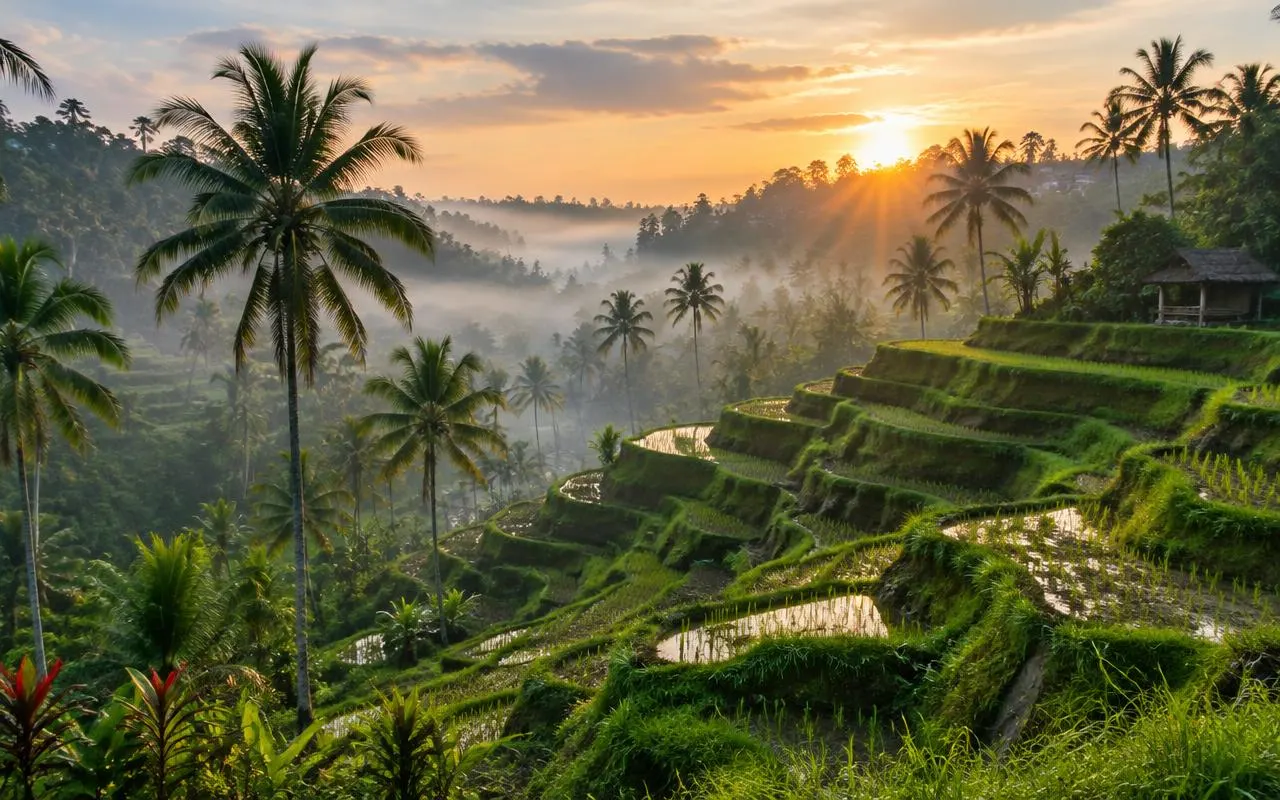
The landscape is just as varied. A chain of volcanoes runs across the island, the highest being Mount Agung, which Balinese people regard as sacred. The fertile slopes support the famous terraced rice fields, irrigated by a cooperative water system known as subak. UNESCO recognised the cultural landscape of Bali province, including the subak system, as a World Heritage Site in 2012, noting how it reflects the philosophy of Tri Hita Karana, which brings together the realms of the spirit, the human world and nature. Around the coast you will find surf breaks, black volcanic sand in the north and east, white sand in the south, and coral reefs that attract divers from around the world.
Best time to visit Bali
Bali sits just south of the equator, so temperatures are warm all year, usually in the high twenties to low thirties Celsius at the coast and noticeably cooler in the highlands. Rather than summer and winter, the island has a dry season and a wet season.
The dry season generally runs from about April to October. Skies are clearer, humidity is lower and the seas on the west coast tend to be good for surfing. July and August are the busiest months because they coincide with school holidays in Europe and Australia, so prices rise and popular sights fill up early. If you want the dry weather with fewer crowds, aim for April, May, June or September.
The wet season usually runs from about November to March. Rain often arrives as heavy afternoon or evening downpours rather than all-day drizzle, and mornings can be bright. The countryside turns intensely green, rice fields look their best, and accommodation is often cheaper outside the Christmas and New Year peak. The downsides are muddier trails, rougher seas in some areas and occasional flooding on low roads.
It is also worth checking the Balinese calendar before you book. Nyepi, the Day of Silence, marks the Balinese new year and usually falls in March. For twenty-four hours the whole island shuts down: the airport closes, nobody is allowed on the streets, and hotels ask guests to stay inside with lights low. It is a fascinating experience if you plan for it, but frustrating if it comes as a surprise. The night before features noisy parades of giant ogoh-ogoh effigies, which are a highlight for many visitors.
Getting to Bali
Almost all international visitors arrive at I Gusti Ngurah Rai International Airport, often called Denpasar airport, on the narrow neck of land between Kuta and Jimbaran in the south. There are direct flights from many cities in Asia and Australia, and connections through hubs such as Singapore, Kuala Lumpur, Doha, Dubai and Jakarta from Europe and beyond.
Entry rules for Indonesia change from time to time, so always check the official Indonesian immigration website shortly before you travel. Many nationalities can obtain a visa on arrival or apply for an electronic visa in advance, and Bali has introduced a tourist levy that visitors pay separately. Make sure your passport has at least six months of validity and enough blank pages, and keep proof of onward travel handy.
From the airport, the simplest way to reach your accommodation is a pre-arranged transfer from your hotel or an official airport taxi from the counter in the arrivals hall. Ride-hailing apps operate in Bali, but pick-up rules at the airport and in some tourist areas vary, so follow the signs and local guidance rather than arguing with drivers.
Getting around the island
Bali has no railway and public buses are limited, so most visitors rely on private drivers, taxis, ride-hailing apps or scooters. Traffic in the south can be very slow, especially around Canggu, Seminyak and Ubud at peak times, so plan fewer stops per day than a map might suggest.
Hiring a car with a driver for the day is one of the most comfortable and popular options. Drivers are usually happy to suggest routes, wait while you explore, and explain local customs along the way. Agree on the price, hours and destinations clearly before you set off.
Renting a scooter gives freedom but carries real risk. Roads are busy, rules are loosely followed and accidents involving tourists are common. If you ride, you need a valid licence that covers motorcycles plus an International Driving Permit, you must wear a helmet, and you should confirm that your travel insurance covers you. If you are not already a confident rider at home, Bali is not the place to learn.
For the offshore islands of Nusa Penida, Nusa Lembongan and Nusa Ceningan, fast boats leave from Sanur. Choose established operators, check the weather, and remember that the sea can be rough, especially in the afternoon.
Where to stay: choosing the right area
Choosing your base is the single most important planning decision in Bali, because each area has a strongly different character.
Ubud sits in the cooler hills in the centre of the island and is often described as its cultural heart. It is the place for rice terrace walks, yoga studios, traditional dance performances, art galleries and craft villages. It does not have a beach, but it makes an excellent base for several nights.
Seminyak is polished and stylish, with boutique shopping, beach clubs and some of the island's best restaurants. It suits couples and travellers who enjoy nightlife and design-led hotels.
Canggu, just north of Seminyak, is known for surfing, laid-back cafés, coworking spaces and a young international crowd. It has grown very quickly, and traffic can be heavy.
Kuta and Legian are busy, budget-friendly and lively, with a long beach that is good for beginner surf lessons. They are convenient for the airport but less peaceful.
Sanur on the east coast is calmer, with a sheltered beach, a long seafront path for walking and cycling, and a relaxed pace that suits families and older travellers. It is also the departure point for boats to the Nusa islands.
The Bukit Peninsula in the far south, including Uluwatu, Bingin and Jimbaran, is famous for clifftop views, world-class surf breaks and some dramatic beaches reached by steep steps.
For quieter, more traditional experiences, consider Sidemen in the east, Amed on the north-east coast for snorkelling and diving, Munduk in the misty northern highlands, or Lovina on the north coast.
A popular first-trip pattern is to spend three or four nights in Ubud, then three or four nights by the sea in Sanur, Seminyak or Uluwatu, with an optional night or two on Nusa Penida or in the east.
Top things to do in Bali
Walk the rice terraces
The terraces at Tegallalang, north of Ubud, are the most photographed, and arriving early helps you avoid both the heat and the crowds. For a broader and quieter experience, the Jatiluwih rice terraces in Tabanan regency are part of the UNESCO-listed subak landscape and spread across a huge area with marked walking trails. Paying a small entry fee helps support local farmers, and staying on paths protects the fields and irrigation channels.
Visit Bali's temples
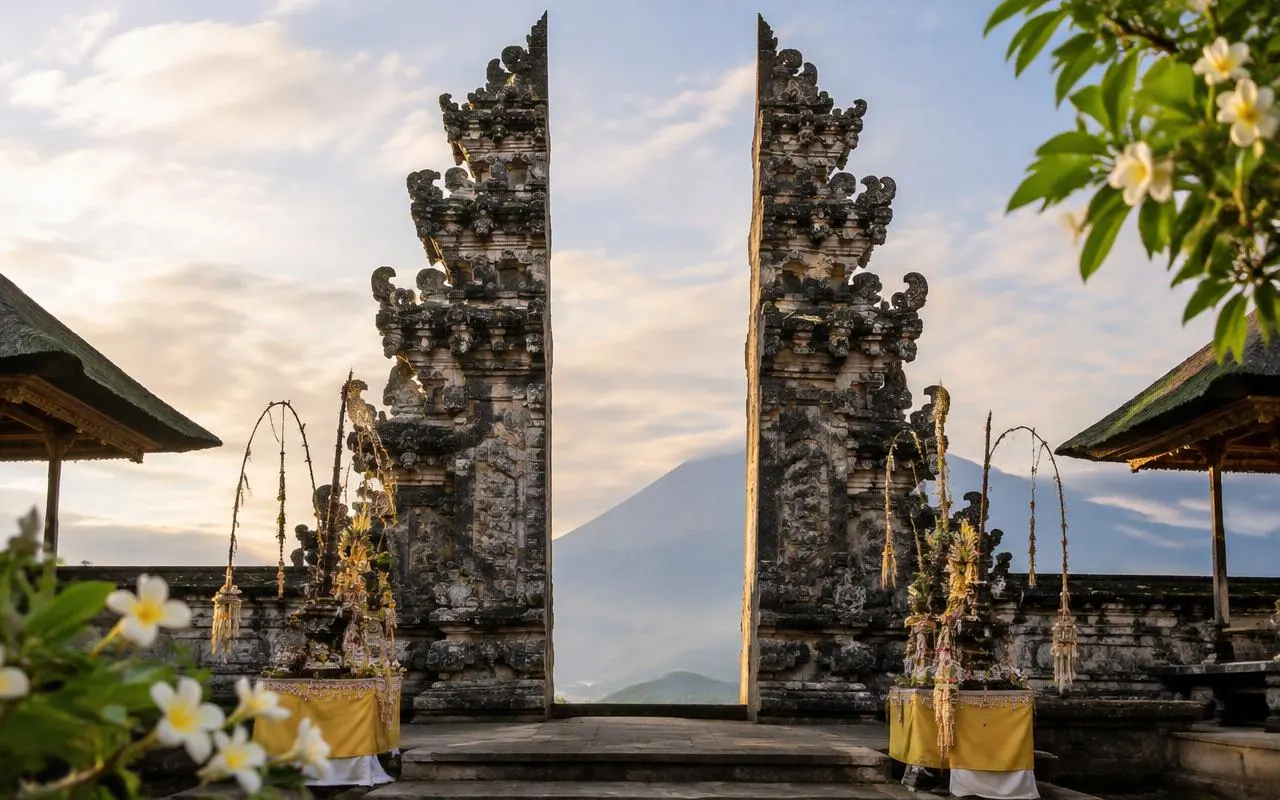
Bali is said to have thousands of temples, from tiny village shrines to grand complexes. Tanah Lot sits on a rock just offshore and is spectacular at sunset. Uluwatu Temple perches on cliffs above the Indian Ocean and hosts evening Kecak fire dance performances. Pura Tirta Empul near Ubud is known for its holy spring where Balinese people come to purify themselves. Pura Ulun Danu Beratan appears to float on a mountain lake, and Pura Lempuyang in the east offers the famous split gate framing Mount Agung on clear mornings. Besakih, on the slopes of Agung, is the largest and most important temple complex on the island.
When you visit, wear a sarong and sash, which are usually available to borrow or rent at the entrance, keep shoulders covered, speak quietly and never climb on shrines or walls. People who are menstruating are traditionally asked not to enter temples, and visitors are expected to respect that custom.
Explore Ubud's culture
Beyond temples, Ubud is a hub for traditional arts. Evening dance performances, including Legong and Barong, are staged in palace courtyards and temple grounds. The surrounding villages specialise in crafts: Mas is known for woodcarving, Celuk for silverwork and Batuan for painting. The Sacred Monkey Forest Sanctuary is popular, but monkeys can grab bags and sunglasses, so keep belongings secure and do not feed them. The Campuhan Ridge Walk is an easy, scenic path, best done early in the morning.
Hike Mount Batur at sunrise
One of Bali's most memorable experiences is a pre-dawn hike up Mount Batur, an active volcano in the north-east. Most groups start around four in the morning and reach the summit in time to watch the sun rise behind Mount Agung and Mount Rinjani on Lombok. The climb is moderate but steep in places, and a local guide is generally required. Bring a warm layer, because the summit is chilly before sunrise.
Head to the beaches and islands
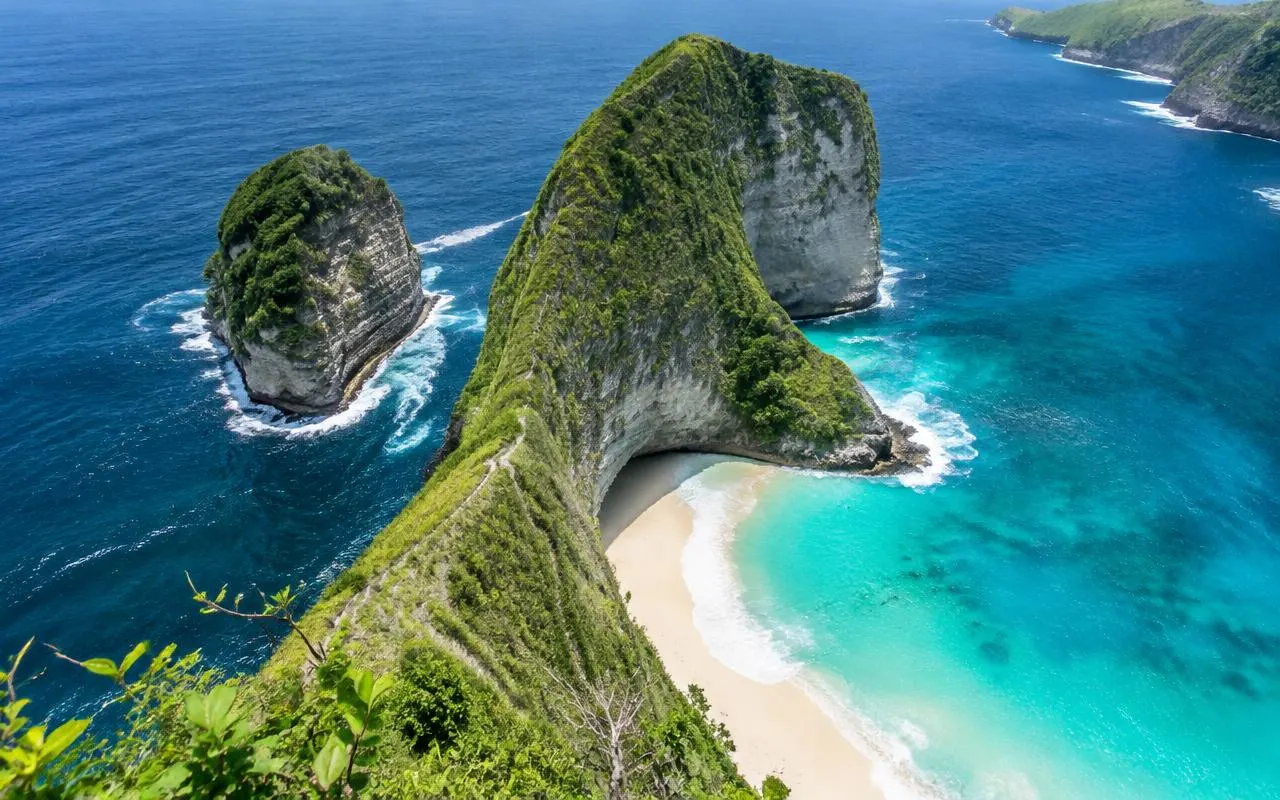
Bali's southern beaches range from busy surf strips to secluded coves. Padang Padang, Bingin, Melasti and Nyang Nyang on the Bukit Peninsula are especially beautiful. Sanur and Nusa Dua offer calm swimming. For something more dramatic, take a fast boat to Nusa Penida to see Kelingking Beach, with its cliff shaped like a dinosaur's head, along with Broken Beach, Angel's Billabong and Crystal Bay. The paths down to some of these beaches are steep and can be dangerous, so wear proper shoes and know your limits.
A sample seven-day Bali itinerary
Day one: arrive, transfer to Sanur or Seminyak and rest. Walk on the beach at sunset and try your first nasi campur.
Day two: spend the morning on the beach or at a surf lesson, then visit Tanah Lot temple for the late afternoon and sunset.
Day three: travel to Ubud, stopping at a craft village on the way. In the evening, watch a traditional dance performance.
Day four: start early at Tegallalang rice terraces, continue to Tirta Empul, and spend the afternoon exploring Ubud's galleries, cafés and the Campuhan Ridge Walk.
Day five: take an early sunrise hike up Mount Batur, then relax in hot springs and rest for the afternoon. Alternatively, take a day trip to Jatiluwih and Ulun Danu Beratan.
Day six: transfer south to Uluwatu. Spend the afternoon at a clifftop beach and watch the Kecak fire dance at Uluwatu Temple.
Day seven: enjoy a final swim, buy last-minute gifts, and transfer to the airport, which is close to the Bukit Peninsula.
With ten days or more, add a few nights on Nusa Penida or Nusa Lembongan, or travel east to Sidemen and Amed for quieter landscapes and great snorkelling.
Food and drink
Balinese and Indonesian food is a highlight of any trip. Nasi campur is a plate of rice with small portions of several dishes, often including vegetables, meat, egg, peanuts and sambal, and it varies from stall to stall. Nasi goreng and mie goreng, fried rice and fried noodles, are reliable everyday favourites. Sate lilit is minced fish or meat wrapped around lemongrass sticks and grilled. Babi guling, spit-roasted pork with spices, is a famous Balinese speciality, while bebek betutu is duck slow-cooked in spices and banana leaves, traditionally prepared for ceremonies.
Drink bottled or filtered water rather than tap water, even when brushing teeth, and many hotels and cafés offer refill stations to cut down on plastic. Be cautious with arak, the local spirit, and only buy it from reputable licensed venues, as there have been cases of dangerous counterfeit alcohol.
Costs and budgeting
Bali can be very affordable or very expensive, depending on your choices. Simple guesthouses and homestays are inexpensive, mid-range hotels with pools are good value compared with many destinations, and private villas and luxury resorts can cost as much as anywhere in the world.
Local food at warungs is cheap, while restaurants in Seminyak, Canggu and Uluwatu charge prices closer to those in Western cities. Private drivers, temple entry fees, activities and spa treatments all add up, so it helps to set a daily budget and track it.
The local currency is the Indonesian rupiah. ATMs are widely available in tourist areas, but use machines attached to banks or inside shops to reduce the risk of card skimming. Card payments are accepted in many hotels and restaurants, but cash is still needed for small warungs, markets, parking and temple donations. Use reputable money changers with clear rates and count your money before leaving the counter.
Health and safety
Bali is generally a safe destination, but a little preparation goes a long way. Speak to a travel health professional several weeks before you go about recommended vaccinations and precautions. Dengue fever is present in Indonesia and is spread by mosquitoes that bite during the day, so use repellent and cover up, especially in the wet season.
Many travellers experience a stomach upset, sometimes called Bali belly. Wash hands often, drink safe water, and choose busy places where food is freshly cooked. Carry oral rehydration salts just in case.
The sun is strong, so use reef-safe sunscreen, wear a hat, and drink plenty of water. At the beach, swim between flags where lifeguards are present, and pay attention to rip currents, which can be powerful on the west and south coasts.
Road safety is the biggest risk for many visitors. Wear a helmet on any motorbike, avoid riding at night or in heavy rain, and never drink and drive. Comprehensive travel insurance that includes medical evacuation is essential.
Indonesia has very strict drug laws with severe penalties, including for small quantities. Do not get involved under any circumstances.
Respecting local culture
Respect is at the centre of a good trip to Bali. Dress modestly away from the beach, especially in villages and temples. Use your right hand when giving or receiving things, and avoid pointing with your finger. Never step over offerings on the ground; walk around them. If you come across a procession or ceremony, give way, keep your distance, and ask before taking photographs of people.
Responsible and sustainable travel
Tourism is a major source of income for Bali, but it also brings pressures, including traffic, water shortages, waste and development on farmland. You can help by choosing locally owned accommodation and restaurants, hiring local guides and drivers, and buying crafts directly from artisans.
Bring a reusable water bottle and shopping bag, refuse unnecessary plastic, and take your litter with you. Use water sparingly, since tourism places heavy demand on the island's supply. Avoid attractions that exploit animals, such as elephant rides or places where wild animals are kept for photos, and choose responsible marine operators that keep a respectful distance from mantas, turtles and dolphins.
Practical tips before you go
Pack light, breathable clothing, a rain jacket in the wet season, a warm layer for the highlands and Mount Batur, a sarong for temples, sturdy shoes for steep beach paths, and reef-safe sunscreen. A universal adaptor is useful, since Indonesia uses two-pin plugs.
Buy a local SIM card or eSIM for data, which makes ride-hailing, maps and messaging much easier.
Allow plenty of time for travel between areas, and do not try to see everything. Bali rewards slow travel, unhurried mornings and spontaneous detours far more than packed schedules.
Frequently asked questions
Is Bali good for first-time visitors to Asia? Yes. Tourism infrastructure is well developed, English is widely spoken in tourist areas, and there is accommodation for every budget, which makes Bali an easy introduction to Southeast Asia.
How many days do you need in Bali? A week is enough for a good first taste, combining Ubud and the coast. Ten days to two weeks lets you add the Nusa islands, the east or the north at a relaxed pace.
What is the best area to stay in Bali? It depends on your style. Ubud is best for culture and nature, Seminyak for dining and shopping, Canggu for surf and cafés, Sanur and Nusa Dua for families, and Uluwatu for clifftop views and surfing.
When is the rainy season in Bali? Usually from about November to March, with heavy but often short downpours, lush scenery and fewer crowds outside the holiday peak.
Final thoughts
Bali has changed a great deal over the decades, and some areas are busier than they once were. Yet the qualities that first drew travellers here remain: graceful temples, generous people, extraordinary landscapes and a culture woven into every day. Plan your base carefully, travel with respect, leave room for slow moments, and Bali will reward you with memories that last long after the tan has faded.
Sources
Source: https://whc.unesco.org/en/list/1194/
Source: https://www.indonesia.travel/gb/en/destinations/bali-nusa-tenggara/bali
Source: https://evisa.imigrasi.go.id/
Source: https://lovebali.baliprov.go.id/